Table of Contents
- Introduction: Why Most Brands Come to DSP Too Late
- What Is Amazon DSP? A Quick Refresher
- When Should a Brand Actually Start Amazon DSP?
- How to Structure Your First Amazon DSP Campaigns
- DSP Campaign Structure at a Glance
- Budget: What You Actually Need to Spend
- What to Expect: Realistic Results in the First 90 Days
- How DSP Works Alongside — Not Instead Of — Sponsored Ads
- How to Measure DSP Performance the Right Way
- Frequently Asked Questions
- The Bottom Line on Amazon DSP for Brands
Introduction: Why Most Brands Come to DSP Too Late
I’ve worked with dozens of Amazon brands over the years, and the conversation around DSP almost always comes up the same way: someone’s PPC costs are climbing, organic rankings have plateaued, and a rep from Amazon has suggested it might be time to “explore programmatic.” At that point, most brand managers open a browser tab, get overwhelmed by the jargon, and quietly close it.
I get it. Amazon DSP sounds complex. And it can be, if you approach it without a clear plan. But here’s what I’ve learned after working on DSP campaigns across categories ranging from beauty to consumer electronics: when it’s used at the right time and structured correctly, it’s one of the most powerful levers a brand can pull on Amazon — or off it.
This guide is written for brands that are already running Sponsored Products and Sponsored Brands, and are wondering whether DSP is the right next step. We’ll cover when you’re actually ready for it, how to build your first campaigns intelligently, and what kind of results you can realistically expect in 2026.
What Is Amazon DSP? A Quick Refresher
Amazon DSP (Demand-Side Platform) is Amazon’s programmatic advertising solution. Unlike Sponsored Products — where you bid on keywords and show up inside search results — DSP lets you buy display, video, and audio ads both on Amazon and across a massive network of third-party sites and apps.
The big difference comes down to intent targeting vs. audience targeting. Sponsored ads catch shoppers at the moment of search. DSP lets you reach people based on their actual behavior — what they’ve browsed, bought, streamed, or searched for on Amazon over time. That first-party behavioral data is what makes Amazon’s DSP genuinely different from Meta or Google’s audience tools.
| Feature | Sponsored Ads | Amazon DSP |
|---|---|---|
| Targeting model | Keyword / ASIN | Audience / Behavior / Intent |
| Pricing model | Cost-per-click (CPC) | CPM (cost per thousand impressions) |
| Ad placement | Amazon search & PDPs | Amazon + third-party sites & apps |
| Reach | Bottom-funnel shoppers | Full funnel — awareness through loyalty |
| Data access | Campaign-level | AMC clean room + custom queries |
| Minimum spend | No minimum | $10K–$50K+ depending on access type |
Think of Sponsored Products as fishing with a line — targeting people who are already looking. DSP is more like casting a wide net across the entire ocean, then layering intelligence on top to make sure the net goes where the fish actually are.
When Should a Brand Actually Start Amazon DSP?
This is the question I hear most often, and it matters a lot. Launching DSP before your account is ready doesn’t just waste budget — it generates misleading data that can set you back for months. Here’s the honest readiness checklist we use before recommending DSP to any client.
DSP Readiness Checklist
- Your Sponsored Ads are already profitable — DSP amplifies what’s working, not fixes what’s broken
- You’ve been selling successfully on Amazon for at least 6–12 months
- Your product listings are fully optimized — strong images, A+ content, 50+ reviews minimum
- Your conversion rate on PDPs is above category average (check Brand Analytics)
- You have a monthly ad budget of at least $10,000–$15,000 to allocate to DSP specifically
- You’re enrolled in Amazon Brand Registry
If you tick most of those boxes, you’re in a good position to start. If you’re still fighting for page-one placement on core keywords, or your listing converts below 10–12%, fix that first. DSP drives traffic — if that traffic lands on a weak page, you’re paying to lose.
Is Your Brand DSP-Ready? Before investing in programmatic, it’s worth auditing your full Amazon presence — listings, PPC structure, and conversion benchmarks. If you’d like a free readiness review, get in touch with our team at Eva.
How to Structure Your First Amazon DSP Campaigns
Most brands make the same structural mistake when they first launch DSP: they build one or two campaigns with broad audience targeting, wait 30 days, check the ROAS, and declare it doesn’t work. The problem isn’t DSP — it’s the structure.
A solid DSP setup mirrors the way customers actually discover and buy products. We call it a three-layer funnel, and each layer has its own goal, audience type, and success metric.
Layer 1 — Awareness (Top of Funnel)
At this stage, you’re talking to people who have never interacted with your brand. The goal isn’t a sale — it’s a brand impression that sticks. Typical audiences here include:
- In-Market Audiences: Shoppers actively browsing your category on Amazon
- Lifestyle Audiences: People Amazon classifies as likely to be interested in your product type based on longer-term behavior
- Contextual Targeting: Ads placed next to relevant editorial content off Amazon
For creative, this is where brand storytelling matters. A short video showing why your product exists tends to perform better than a discount-first message. Keep frequency caps tight — 3 to 5 impressions per user per week is usually the sweet spot.
Layer 2 — Consideration (Mid Funnel)
This layer targets people who’ve shown some signal of interest but haven’t bought yet — they’ve viewed your product page, clicked a sponsored ad, or searched for your brand name without converting. These audiences are warmer, and your messaging can shift accordingly.
- ASIN Retargeting: Re-engage shoppers who viewed your product detail pages
- Branded Search Retargeting: Reach users who searched your brand name but didn’t purchase
- Competitor ASIN Targeting: Show your ads to people who recently viewed rival products
Competitor ASIN targeting deserves its own mention. It’s one of the most aggressive and effective tactics available in DSP — you can literally place your ad in front of someone who just spent time on a competitor’s product page. Done well, with strong creative that clearly shows your advantage, it can move share quickly.
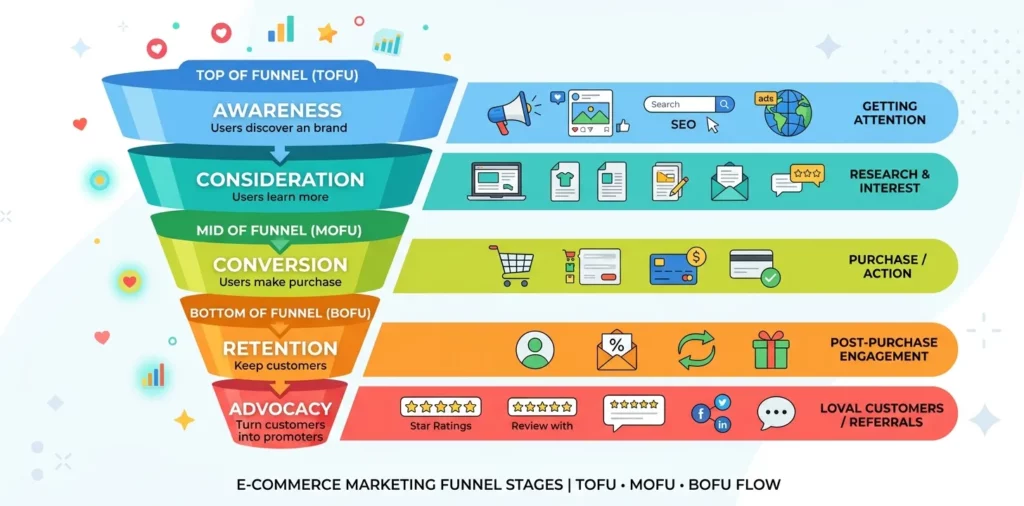
Layer 3 — Conversion & Loyalty (Bottom of Funnel)
At the bottom, you’re focused on closing the sale and retaining customers who already bought. This is where DSP’s retargeting capabilities really shine.
- Cart Abandoner Retargeting: Re-engage users who added to cart but didn’t checkout
- Past Purchaser Retargeting: Reach existing customers with new products or replenishment offers
- AMC Lookalike Audiences: Build audiences modeled on your best customers and find more people like them
Past purchaser campaigns are often the highest-ROAS campaigns in a brand’s DSP portfolio. The person already trusts you — showing them a relevant new SKU or a subscription offer takes much less convincing than a cold audience.
DSP Campaign Structure at a Glance
| Funnel Stage | Audience Type | Ad Format | Primary KPI |
|---|---|---|---|
| Awareness | In-Market, Lifestyle | Video, Display | Brand search lift, impressions |
| Consideration | ASIN viewers, Competitor ASIN | Dynamic Display | Detail page views, NTB rate |
| Conversion | Cart abandoners, ASIN retarget | Display with offer | ROAS, attributed sales |
| Loyalty | Past purchasers | Display / Video | Repeat purchase rate, LTV |
Budget: What You Actually Need to Spend
Amazon’s managed-service DSP typically requires a minimum of $50,000 per month. That’s not where most brands start. Thankfully, there are a few other routes.
- Self-Service DSP: Available to brands via Seller Central or Vendor Central after approval. No formal spend minimum, though campaigns need enough budget to generate statistically useful data.
- Agency-Managed DSP: Many Amazon agencies (including ours) can access DSP on your behalf with lower entry points, typically starting around $10,000–$15,000 per month.
- Performance+ (AI-Managed): Amazon’s newer automated full-funnel option that requires less manual setup and can work with smaller budgets.
In practice, a brand spending $10,000–$20,000 per month on DSP can build a meaningful three-layer funnel. The key is concentrating budget in one or two audience layers at first rather than spreading thin across all three. Once you have clean performance data (usually after 60–90 days), you can expand.
What to Expect: Realistic Results in the First 90 Days
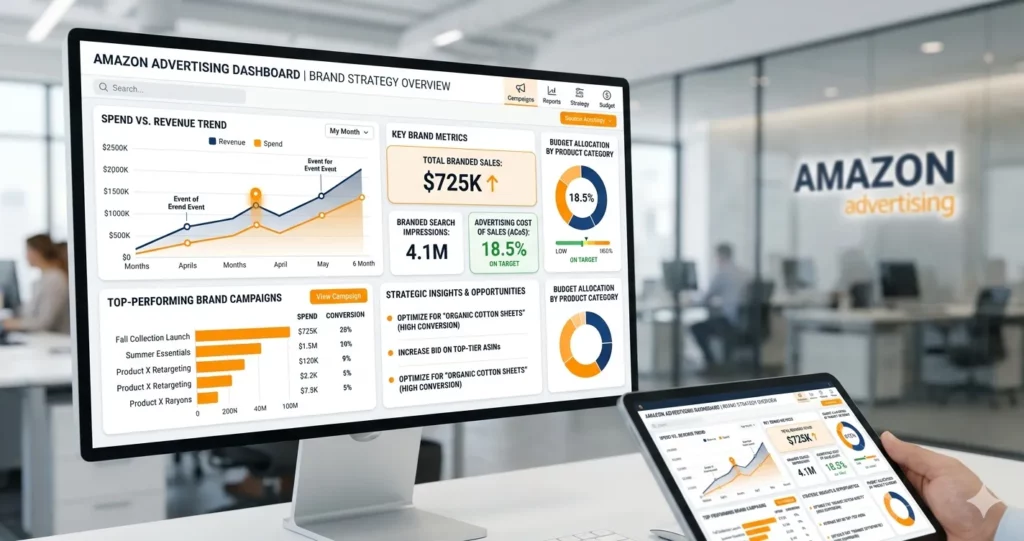
Let me be direct about something: DSP is not a quick-win channel. If you launch it expecting the same kind of week-over-week attribution data you get from Sponsored Products, you’ll misread the results and pull out too early.
Here’s a more honest picture of what typically happens across the first three months:
| Timeline | What You’ll Likely See |
|---|---|
| Days 1–30 | Learning phase — algorithms calibrate, CPMs stabilize. Focus on delivery and frequency, not ROAS. |
| Days 30–60 | First attribution data appears. New-to-brand metrics start showing. Branded search volume may tick up. |
| Days 60–90 | Retargeting layers start converting. Direct ROAS becomes more meaningful. Optimization begins. |
| 90 days+ | Full-funnel picture emerges. AMC analysis possible. Campaign structure can be refined for efficiency. |
One of the clearest early signals that DSP is working is branded search lift — more people searching your brand name on Amazon even when they didn’t click your ad. That organic intent build-up is real value, even if it doesn’t show up neatly in your DSP attribution dashboard.
Don’t Judge DSP by 30-Day ROAS AloneThe full picture only emerges after 60–90 days of consistent spend. Use AMC to track new-to-brand rates, branded search growth, and assisted conversions alongside direct ROAS — those are the metrics that show whether DSP is actually growing your brand on Amazon.
How DSP Works Alongside — Not Instead Of — Sponsored Ads
The biggest misconception I hear is that DSP replaces PPC. It doesn’t. They serve completely different roles and work much better together than either does alone.
Sponsored Products and Sponsored Brands capture demand — they show up when someone is actively searching. DSP creates demand — it reaches people before the search happens, and re-engages people who weren’t ready to buy the first time. Together, they cover the full customer journey.
- A shopper sees your DSP awareness ad on a news site. They don’t click.
- Three days later, they search for your category on Amazon. Your Sponsored Product shows up. They click through.
- They view your listing but don’t buy. Your DSP retargeting campaign shows them your product again on a third-party app.
- They return to Amazon and convert.
That multi-touch journey is invisible if you’re only looking at last-click attribution. It’s why DSP campaigns can look underperforming on their own dashboard while simultaneously driving meaningful lift in your overall account.
How to Measure DSP Performance the Right Way
Standard DSP reporting inside the Amazon Ads console gives you attributed sales, ROAS, DPVs (detail page views), and new-to-brand metrics. That’s a start. But for a real understanding of what DSP is doing for your brand, you need Amazon Marketing Cloud (AMC).
Key DSP Metrics to Track
- New-to-Brand (NTB) Rate: What share of DSP-attributed purchases came from customers who hadn’t bought from you in the past 12 months? A healthy NTB rate (often 50–70% in awareness campaigns) shows you’re actually growing your customer base.
- Detail Page View Rate (DPVR): How often are people who see your DSP ads actually visiting your product page? A low DPVR on awareness campaigns may signal a creative issue.
- Branded Search Lift: Track whether branded search volume on Amazon increases after you launch DSP. AMC can help you correlate this.
- Total ROAS vs. Direct ROAS: Direct ROAS from DSP alone will typically look lower than Sponsored Ads. Look at total account ROAS — if overall performance improves after adding DSP, that’s the signal that matters.
Frequently Asked Questions
Not necessarily, but you do need some baseline. We typically recommend brands have at least $30,000–$50,000 in monthly Amazon revenue before adding DSP. Below that, the economics of CPM-based advertising are harder to justify against the returns.
Yes. Sellers on Seller Central can access DSP through self-service (after Amazon approval) or via a certified Amazon Advertising partner. Vendor Central brands have automatic access through managed service.
Sponsored Display is a self-serve ad type that offers some audience and retargeting features but is more limited in scope. DSP gives you access to off-Amazon inventory, more advanced audience types, video and OTT formats, and AMC analytics. Think of Sponsored Display as a lighter version of what DSP can do.
In our experience, you need at least $10,000 per month allocated specifically to DSP to collect enough data to optimize within a reasonable timeframe. Spreading $3,000 across five audience segments won’t generate statistically reliable insights.
If your Sponsored Ads ACoS is already a concern, adding DSP is likely premature. Sort out the efficiency of your bottom-funnel spend first. DSP adds to the top and middle of the funnel — it amplifies what’s already working, rather than rescuing what’s struggling.
Plan for 60–90 days before drawing conclusions. The first 30 days are almost always a learning phase. Brands that cut campaigns after 30 days because ROAS looks low are usually pulling out right before the data gets useful.
The Bottom Line on Amazon DSP for Brands
Amazon DSP isn’t for every brand — and it’s definitely not for every stage of a brand’s growth. But for established sellers who’ve maxed out what Sponsored Ads alone can do, it opens up a genuinely different way to grow: reaching people earlier in the journey, re-engaging those who slipped through the cracks, and building the kind of brand familiarity that keeps customers coming back.
The key is going in with the right expectations. DSP takes longer to show its impact. It requires better creative. It works best as part of a broader strategy, not as a standalone fix. But when it’s structured well and given the time to learn, the results tend to compound in ways that PPC alone rarely does.
If you’re considering Amazon DSP and want a clear picture of whether your brand is ready — and how to structure it for your specific category and goals — that’s exactly the kind of work we do at Eva. Feel free to reach out.
Ready to Take Your Amazon Advertising Beyond PPC? Our team at Eva helps established Amazon brands build and manage full-funnel DSP strategies — from audience setup and creative direction to AMC measurement and ongoing optimization. Get in touch to book a free strategy call.
Brands using DSP should also understand how AMC connects impressions, audiences, and purchases. Eva’s Amazon Marketing Cloud guide explains the measurement layer.
Related Eva guide: For a deeper operating view, read Amazon DSP Lookalike Audiences for Customer Acquisition.
Related Eva guide: For a deeper operating view, read 3 Best Bid Strategies on Amazon DSP.
Related Eva guide: For a deeper operating view, read Amazon DSP Audience Segmentation for High-Ticket Sales.