We’ve spent years studying how the biggest players dominate their markets. Today, we’re breaking down the latest generation of Amazon marketing strategy into an actionable framework you can apply to your business tomorrow.
Short answer: Amazon marketing today is one connected plan, not a set of separate tactics. The listing converts traffic, PPC captures search demand, brand content such as A+ Content, a Brand Store, and video builds trust, and Amazon DSP reaches and retargets shoppers on and off Amazon. Budgets and creative work best when they are planned together.
Table of Contents
Amazon marketing plan quick answers
What belongs in an Amazon marketing plan?
Profit targets by product, listing optimization (keywords, images, A+ Content, reviews), an ad structure across Sponsored Products, Sponsored Brands, and Sponsored Display, brand content such as a Brand Store and video, Amazon DSP for reach and remarketing when budget allows, pricing and promotions, inventory planning, and a weekly review of sales, ad spend, and profit.
How is Amazon marketing different in 2026?
More of the shopping journey runs through AI and video. Amazon’s shopping assistant Rufus answers shopper questions from listing content and reviews, and video placements in Sponsored Brands and Amazon DSP keep growing. That makes complete, accurate listings and video creative more important, and it pushes brands to plan search ads and DSP together instead of in separate silos.
When should a brand hire help?
Consider outside help when ad spend grows faster than profit, when the team cannot keep up with weekly listing, advertising, and inventory work, when you expand to new marketplaces or into DSP, or when account health issues pull time away from growth. Eva is an Amazon Advanced Partner that runs listings, PPC, DSP, and reporting in one plan.
To have one team run the full plan, see Amazon management services, or book a call.
The 5 Core Pillars of Amazon’s Marketing Success
Amazon didn’t become a trillion dollar e-commerce giant by accident. Their Amazon marketing strategy follows clear, replicable systems that any business can adapt and implement.
Let’s analyze the marketing mix for Amazon that’s driven unprecedented growth.
1. AI-Powered Personalization: The Foundation of Customer Acquisition
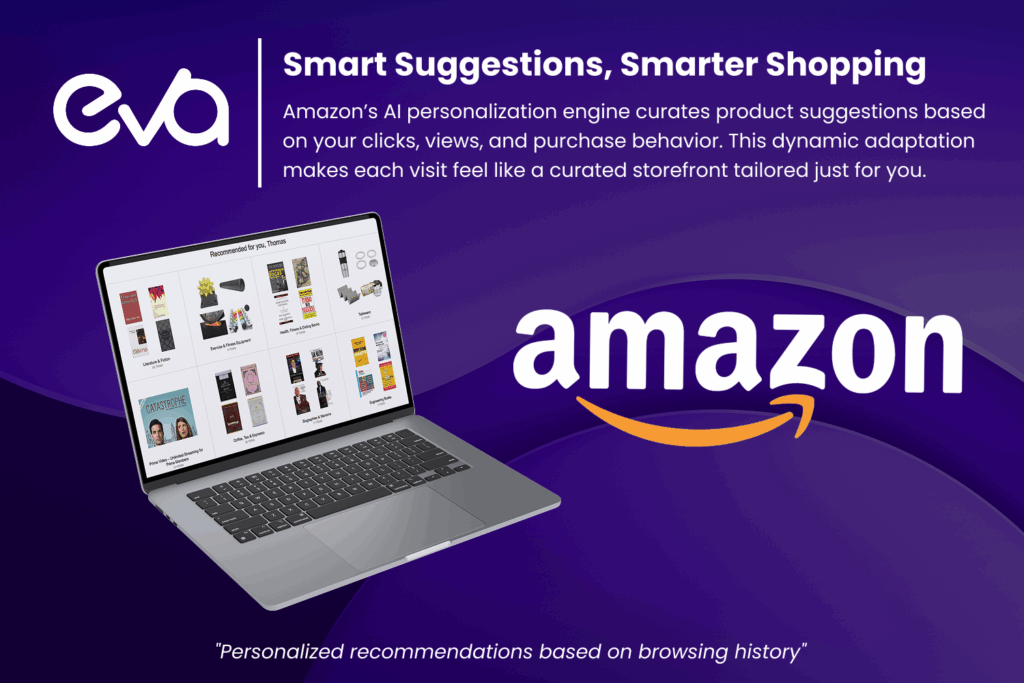
Amazon’s product recommendation engine isn’t just a “nice feature”—it’s the backbone of how Amazon attracts customers.
Their refined algorithm doesn’t just suggest random products; it creates uniquely tailored shopping experiences that anticipate customer needs before they even search.
The system extends beyond simple product suggestions to influence:
- Search result rankings
- Email marketing sequences
- On-site advertising placements
- Product page optimization
Third-party sellers and small business owners leveraging these personalization tools see 30-40% higher conversion rates than those who don’t. This isn’t theory—it’s arithmetic.
What makes this approach remarkable is how it scales from Amazon’s own product offerings to third-party sellers.
The Amazon marketing techniques here don’t discriminate between the retail giant’s inventory and small business products, creating a more level playing field than many realize.
2. Video-First Content Strategy: Moving Beyond Static Images
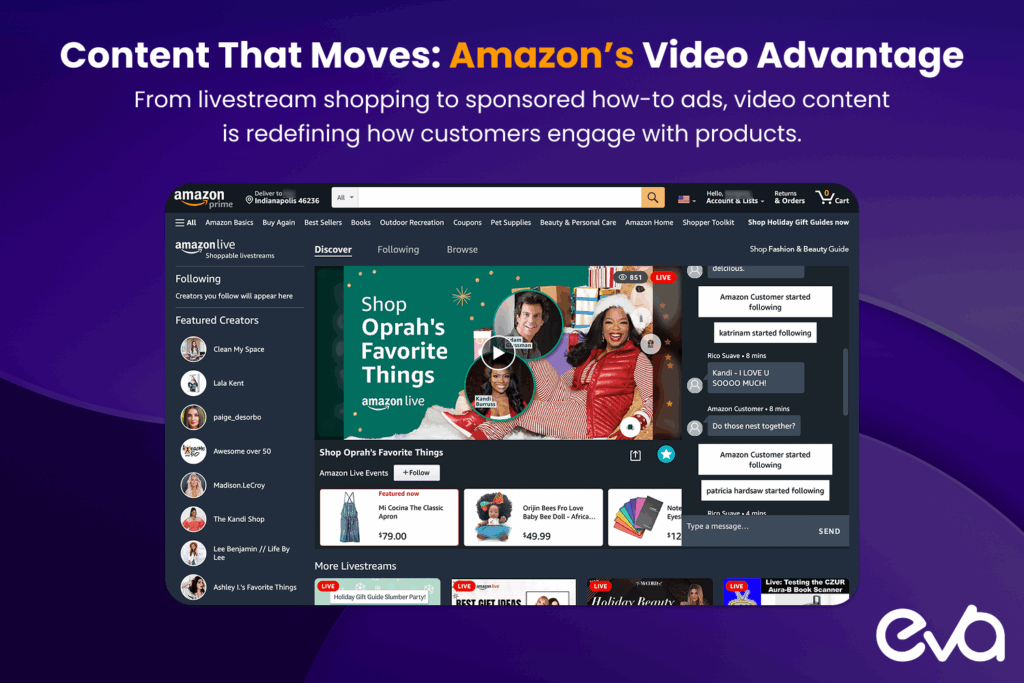
Amazon’s digital marketing strategy has evolved dramatically in recent years. Video content has become central to their approach through three key formats:
- Amazon Live: Livestream shopping experiences where brands showcase products in real-time
- Sponsored Brands Video: Short video ads appearing in search results, showing products in action
- Streaming TV Ads: Video commercials delivered through Fire TV and partner streaming services
These video-centric Amazon marketing techniques deliver significant advantages over static listings.
They allow sellers to demonstrate products in use, answer common questions visually, and create emotional connections with potential buyers.
For small business owners and third-party sellers, this video focus has actually leveled the playing field.
You don’t need massive production budgets—even smartphone-shot demonstrations can outperform professional static images because they show authentic product functionality.
Today’s consumers increasingly demand to see products in use before purchasing. Static product pages simply don’t convert at rates necessary for sustainable growth.
Amazon recognized this shift early and built the infrastructure to support video across their platform.
3. Data Analytics: The Backbone of Marketing Mix Optimization
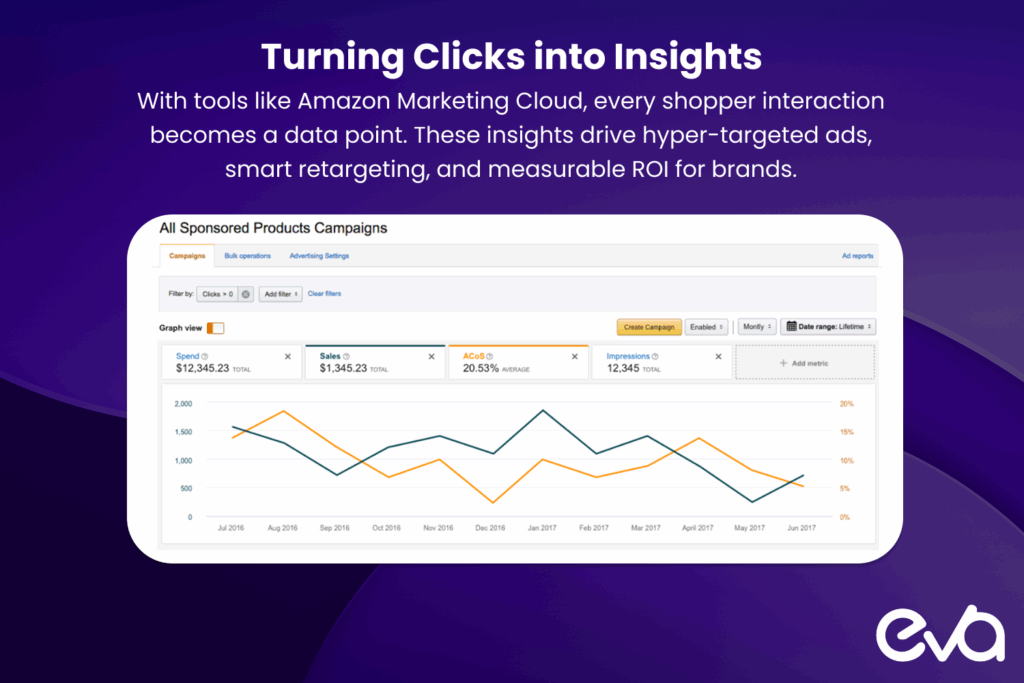
Amazon’s implementation of Amazon Marketing Cloud (AMC) has revolutionized how brands measure and optimize their marketing campaigns.
This approach to marketing mix for Amazon delivers unprecedented visibility into:
- Customer journey tracking across touchpoints
- Attribution of sales to specific marketing efforts
- Keyword refinement based on actual purchase behavior
- Ad budget optimization for maximum ROI
- Precision audience segmentation
This data-driven approach is no longer optional—it’s the minimum requirement for successful marketing efforts in the Amazon ecosystem.
What separates winners from losers on the platform is how they leverage data analytics to inform their Amazon marketing techniques.
The most successful sellers aren’t making gut decisions; they’re building systematic approaches to testing, measuring, and optimizing every aspect of their presence.
4. Evolved Pricing Strategies Amid Economic Challenges
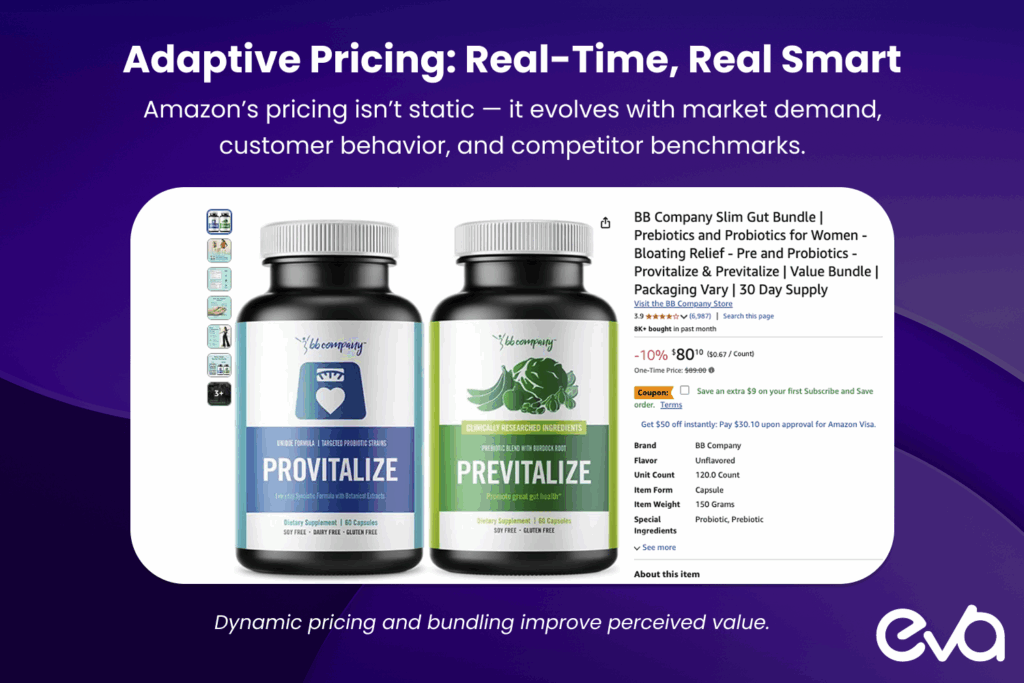
Amazon’s competitive pricing model has adapted to economic pressures, demonstrating that direct price competition isn’t the only path to success. Their approach leverages:
- Dynamic pricing algorithms that adjust in real-time
- Value emphasis over pure price competition
- Amazon Prime marketing strategy highlighting broader benefits
- Loyalty programs creating stickier customer relationships
- Bundle offers that increase average order value
These pricing strategies help both Amazon and its sellers maintain margins despite economic headwinds in the United States and globally.
Jeff Bezos built this approach around a simple principle: earn customer loyalty through value, not just price.
An effective Amazon market analysis reveals that sellers who compete solely on price ultimately fail. The sustainable approach combines smart pricing strategies with value-added services that justify premium positioning.
5. Omnichannel Integration: Breaking Platform Boundaries
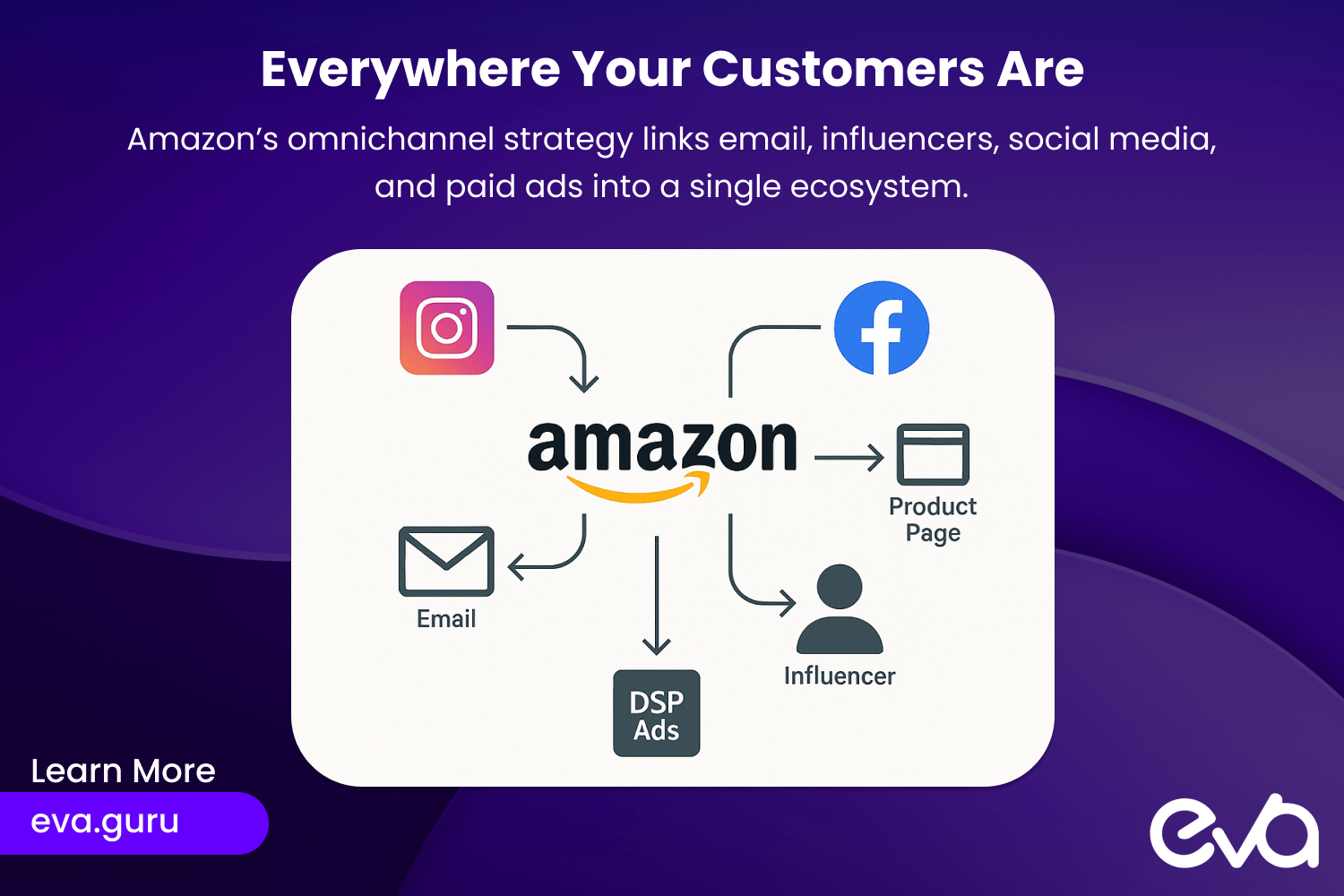
Amazon’s marketing strategy extends far beyond its own digital properties. Today’s successful Amazon marketing strategy analysis shows winners coordinating:
- Social media campaigns driving traffic to Amazon product pages
- Influencer partnerships with direct product links
- Content marketing improving organic rankings
- Email sequences leading customers to Amazon for conversion
- Targeted advertising that reaches specific audience segments
The Amazon ecosystem is no longer isolated—it’s part of a broader marketing infrastructure. The company has masterfully integrated its wide range of products and services into a cohesive experience that meets customers wherever they are.
This omnichannel approach is increasingly essential for party sellers and brands hoping to maximize their success. Amazon’s digital marketing strategy now requires coordination with off-platform efforts to achieve optimal results.
6. Amazon Web Services: The Hidden Marketing Engine
While most Amazon marketing strategy case studies focus on retail, we can’t ignore how Amazon Web Services (AWS) plays into their overall approach. This infrastructure powers not just Amazon’s operations but also:
- Provides valuable data storage for marketing analytics
- Enables advanced machine learning for optimization
- Supports video and rich media experiences
- Creates additional touchpoints with business customers
- Reinforces Amazon’s position as a technology leader
AWS represents an often-overlooked component of how Amazon attracts customers across multiple segments, generating both direct revenue and strengthening the core brand.
Actionable Takeaways: Your 30-Day Implementation Plan
Here’s what this means for your business:
- Embrace AI-Driven Personalization: Use available data to segment customers and personalize messaging, even without Amazon’s resources. Start by analyzing your top 20% of customers to identify patterns.
- Invest in Video Content: Allocate 30% of your content budget to video. Start simple—product demonstrations convert better than static images. Focus on answering the top 3 customer questions.
- Build a Data Framework: Track 3-5 key metrics that directly influence revenue. Ignore vanity metrics. Build weekly review systems that translate data into action.
- Implement Value-Based Pricing: Compete on value delivery rather than lowest price. Build bundling strategies that increase perceived value. Test price points systematically rather than guessing.
- Adopt Cross-Channel Thinking: Map customer journeys across platforms and build bridges between them. Ensure consistent messaging regardless of where customers encounter your brand.
Amazon’s marketing campaigns succeed because they’re built on these fundamental principles, not because of their size. Small business owners can apply the same frameworks at appropriate scale.
How Eva Can Power Your Amazon Marketing Success
For brands looking to implement these Amazon marketing techniques without building the infrastructure from scratch, Eva offers an AI-powered platform specifically designed to execute these strategies:
Smart Advertising Optimization
Eva’s AI performs the precision hourly bid adjustments necessary for maximum ROAS:
- Automated task execution for unmatched efficiency
- Long-tail keyword management handled by AI
- Inventory-aware advertising that prevents wasted spend on out-of-stock items
- Conversion-focused ad adjustments that increase effectiveness
Data-Driven Decision Making
Eva provides comprehensive profit analytics that offer unprecedented visibility into:
- Real-time performance dashboards showing how marketing efforts impact your bottom line
- Product-level visibility into historical sales and profit trends
- Daily sales metrics that translate into actionable strategies
- Operational insights that reduce costs and maximize revenue
Competitive Intelligence
Eva’s experts leverage deep product category insights to help you:
- Target audiences with precision using advanced segmentation
- Outsmart competition using data-driven strategies
- Apply optimal pricing prediction using proprietary algorithms
- Maximize profit margins while remaining competitive
End-to-End Amazon Support
Eva addresses all four pillars critical to e-commerce success:
- Driving Traffic: AI-optimized Amazon PPC combined with audience-based marketing
- Optimizing Conversion: Enhanced product pages, SEO, and compelling content
- Inventory Availability: Real-time tracking that avoids stockouts and storage fees
- Maximizing Profits: Comprehensive analytics and strategic pricing for sustained growth
The Bottom Line
Amazon’s marketing strategy isn’t magic—it’s methodical. They’ve built systematic approaches to personalization, content, data, pricing, and channel integration that any business can adapt.
The data analytics powering Amazon’s success is increasingly accessible to businesses of all sizes. The winners don’t just admire Amazon’s success—they reverse-engineer it, adapt it, and implement it in their own businesses.
Amazon product marketing has transformed from simple listings to sophisticated, multi-channel experiences. By studying their approach and partnering with specialized experts like Eva, you can extract principles that work across industries and scale.
Whenever you’re ready, here are two ways we can help you implement these strategies:
Claim a Free Audit & Forecast: Our experts will analyze your business and craft a profitable growth plan.
Start with Eva’s AI Platform: Access enterprise-level technology that delivers smart advertising optimization, profit analytics, and competitive intelligence for your Amazon business.