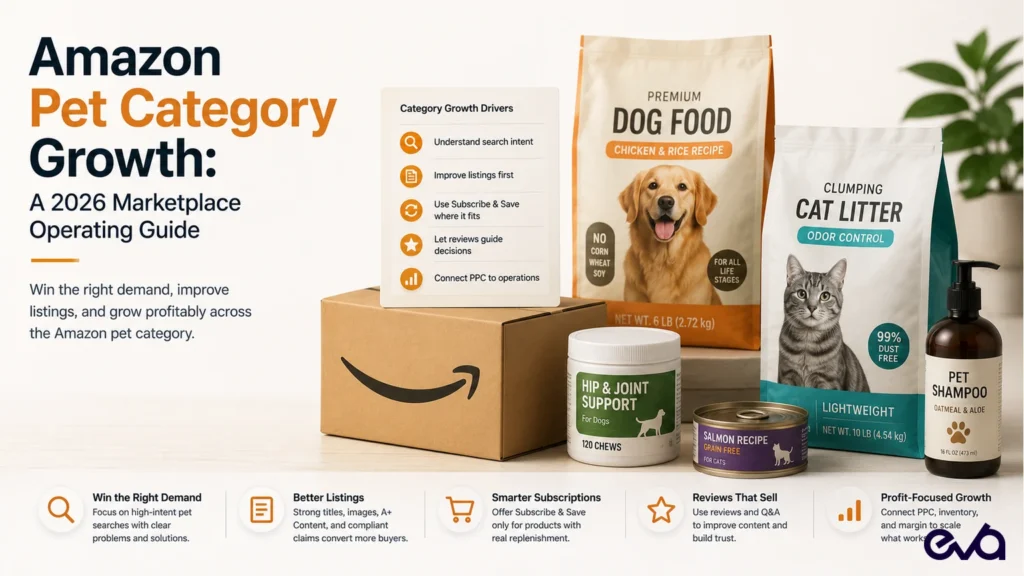
Amazon pet category growth is attractive because shoppers often arrive with high intent. They search for dog food, cat treats, calming chews, litter, grooming tools, supplements, toys, and replacement items when they already have a problem to solve.
That does not mean growth is easy. Pet shoppers compare ingredients, reviews, delivery speed, price, claims, Subscribe & Save options, and brand trust quickly. A pet brand needs both visibility and conversion discipline if it wants Amazon growth to become profitable.
Table of Contents
- What Amazon pet category growth should accomplish
- Understand pet search intent before changing listings
- Improve listing quality before increasing PPC
- Use Subscribe & Save where the product truly replenishes
- Let reviews guide product and content decisions
- Connect Amazon PPC to pet category operations
- Use Amazon pet search behavior as the operating map
- Improve the pet listing before adding more traffic
- Use Subscribe & Save as a ranking and retention signal only when it fits
- Build a category review around products, not only keywords
- Final takeaway
What Amazon pet category growth should accomplish
The goal is to win the right demand, not every click. A pet brand should identify the product segments where it can be credible, available, differentiated, and profitable. That might be breed-specific food, sensitive-stomach treats, senior dog supplements, cat litter convenience, grooming refills, or travel accessories.
Amazon can also show what shoppers care about. Search queries, review language, competitor titles, questions, and Sponsored Products performance often reveal objections that should be addressed across the entire ecommerce system.
Understand pet search intent before changing listings
Pet category searches can look similar while carrying different intent. “Dog joint supplement” is not the same as “senior dog hip support.” “Cat litter odor control” is not the same as “lightweight cat litter.” Listing copy should reflect the specific problem, pet type, and shopper concern.
| Intent type | Example query | Listing implication |
|---|---|---|
| Problem-led | dog bad breath chews | Lead with the problem and safe usage. |
| Life-stage | senior cat supplement | Explain age-specific relevance. |
| Format-led | freeze dried dog treats | Clarify ingredients, serving, and storage. |
| Convenience-led | cat litter subscription | Highlight delivery, pack size, and reorder. |
Improve listing quality before increasing PPC
Amazon PPC can expose demand, but it cannot fix a weak product page. Pet listings need clear titles, image sequencing, A+ Content, compliant claims, ingredient clarity, size and usage guidance, review management, and strong comparison logic.
If a pet product has high impressions and low click-through rate, title and main image may be limiting. If it has clicks but low conversion, the issue may be pricing, reviews, claims, content, variation structure, or offer quality. Eva’s Amazon Search and AI Optimization service is built around this connection between ranking, content, and conversion.
Use Subscribe & Save where the product truly replenishes
Amazon Subscribe & Save can help pet products with regular use, but it should not be treated as a universal fix. Food, supplements, dental chews, litter, grooming refills, and waste bags may fit. Durable accessories may not. The economics depend on discount, retention, inventory, and delivery reliability.
When Subscribe & Save is active, the listing should make routine usage clear. Pet owners need to understand how long the product lasts, how to use it, and why recurring delivery makes sense.
Let reviews guide product and content decisions
Pet reviews are rich with language that can improve SEO and conversion. Owners mention pet type, flavor, smell, packaging, dosage, texture, delivery, results, and concerns. That language should influence listing bullets, images, FAQs, comparison charts, and ad groups.
Review mining is especially useful when the brand is deciding whether to expand into new pet segments. If customers repeatedly mention a use case the brand did not emphasize, that may become a new content angle or product bundle.
Connect Amazon PPC to pet category operations
Amazon PPC should be managed with inventory, reviews, and margin in view. A campaign can push a product into stronger visibility, but if the offer cannot convert or the product goes out of stock, the brand may waste both budget and ranking momentum.
For campaign structure and profit discipline, review Eva’s Amazon PPC service page. If the brand needs a quick diagnostic first, the free advertising audit can identify wasted spend and structure gaps.
Final takeaway
Amazon pet category growth comes from matching real pet-owner search intent with strong listing execution, reliable operations, and contribution-aware advertising. The brands that scale best do not chase every term; they build authority where their product, proof, and economics are strongest.