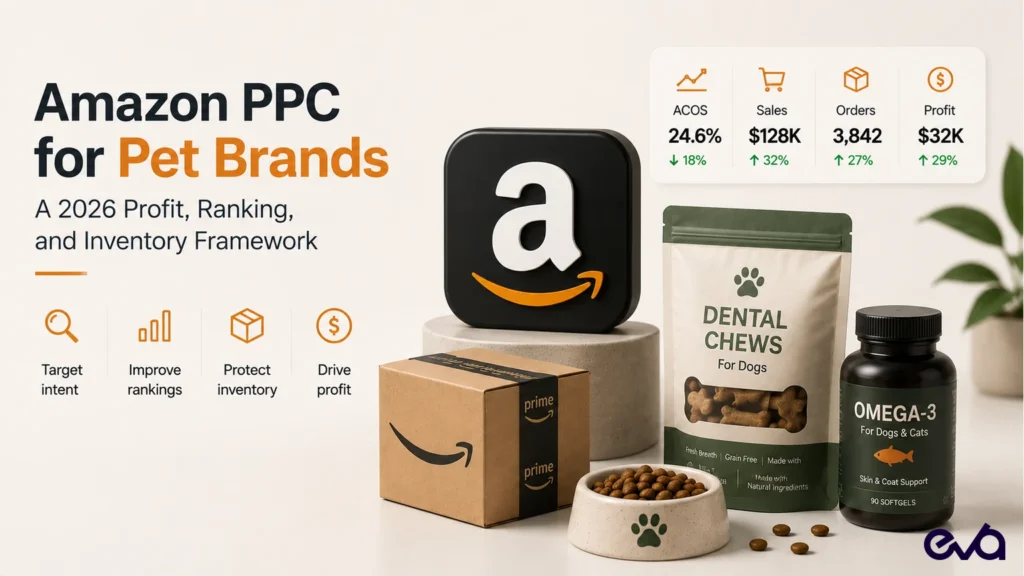
Amazon PPC for pet brands should do more than buy visibility. It should help the brand learn which pet-owner problems convert, which products deserve budget, and where profitability breaks down.
Pet PPC can become expensive when campaigns are built around broad category demand without enough intent separation. A dog supplement brand, a cat litter brand, and a grooming accessory brand may all need different keyword structures, offer logic, review thresholds, and inventory rules.
Table of Contents
- What Amazon PPC for pet brands should accomplish
- Separate pet keyword intent
- Do not scale PPC before the listing is ready
- Use reviews and Q&A to improve campaigns
- Connect PPC to inventory and contribution
- Build a practical optimization rhythm
- Build pet PPC around intent clusters
- Connect PPC to listing readiness
- Use inventory and contribution margin as campaign controls
- Review pet PPC every week with a simple decision tree
- Final takeaway
What Amazon PPC for pet brands should accomplish
The first job is demand capture. The second is learning. The third is profitable scaling. If a campaign only reports spend, sales, ACOS, and ROAS, the brand may miss the deeper questions: which query converted, which product page answered the objection, which review signal mattered, and whether repeat behavior supports the spend.
Pet owners often search with high specificity. They may include pet type, life stage, ingredient preference, symptom language, format, size, or delivery need. Campaign structure should preserve those differences.
Separate pet keyword intent
Broad terms can create visibility, but they can also hide weak economics. Pet brands should separate category, problem, ingredient, life-stage, competitor, and branded intent. That makes it easier to adjust bids, creative, and listing content.
| Intent group | Example | Campaign implication |
|---|---|---|
| Category | dog treats | High volume, needs strict profitability guardrails. |
| Problem | dog bad breath chews | Stronger conversion if listing answers the problem. |
| Life stage | senior dog supplement | Use age-specific copy and images. |
| Ingredient | salmon oil for dogs | Clarify formula, sourcing, and usage. |
| Brand | your brand dog food | Protect demand and measure loyalty. |
Do not scale PPC before the listing is ready
PPC sends shoppers to a decision page. If the page lacks ingredient clarity, comparison logic, review strength, claims discipline, or strong images, spend will expose the weakness faster. Pet listings should answer safety, usage, size, flavor, delivery, and subscription questions before budgets increase.
This is where SEO and PPC overlap. Eva’s Amazon Search and AI Optimization service focuses on the ranking and conversion side, while the Amazon PPC service focuses on campaign execution and profitable scale.
Use reviews and Q&A to improve campaigns
Pet reviews often reveal the exact phrases shoppers use. “My senior dog,” “picky cat,” “less mess,” “easy refill,” “gentle on stomach,” and similar language can guide keyword expansion, negative keywords, listing updates, and creative testing.
Q&A can also show which objections block conversion. If shoppers ask about dosage, pet size, ingredient source, storage, or compatibility, those answers should appear in listing content and ad landing logic.
Connect PPC to inventory and contribution
Pet PPC performance can look strong right before it creates an operational problem. If the campaign sells through inventory faster than planned, the product can stock out, rankings can weaken, and the next campaign restart may be more expensive.
Budget decisions should include contribution margin, available units, replenishment timing, Subscribe & Save obligations, review health, and customer support load. The pet ecommerce profitability guide gives a broader framework for those decisions.
Build a practical optimization rhythm
A strong pet PPC review rhythm does not chase daily noise. Weekly reviews should focus on query quality, wasted spend, conversion shifts, stock risk, review changes, and landing-page friction. Monthly reviews should connect campaign learnings to listing updates, SEO, content, and lifecycle.
- Segment campaigns by intent and product economics.
- Review search terms for new pet-owner language.
- Use negative keywords to remove irrelevant pet categories.
- Pause scale when inventory or review health weakens.
- Send high-intent learnings back into listing content.
Final takeaway
Amazon PPC for pet brands works best when it is treated as an operating system, not just a bidding tool. The strongest programs connect keyword intent, listing quality, inventory, reviews, and contribution margin before pushing for scale.