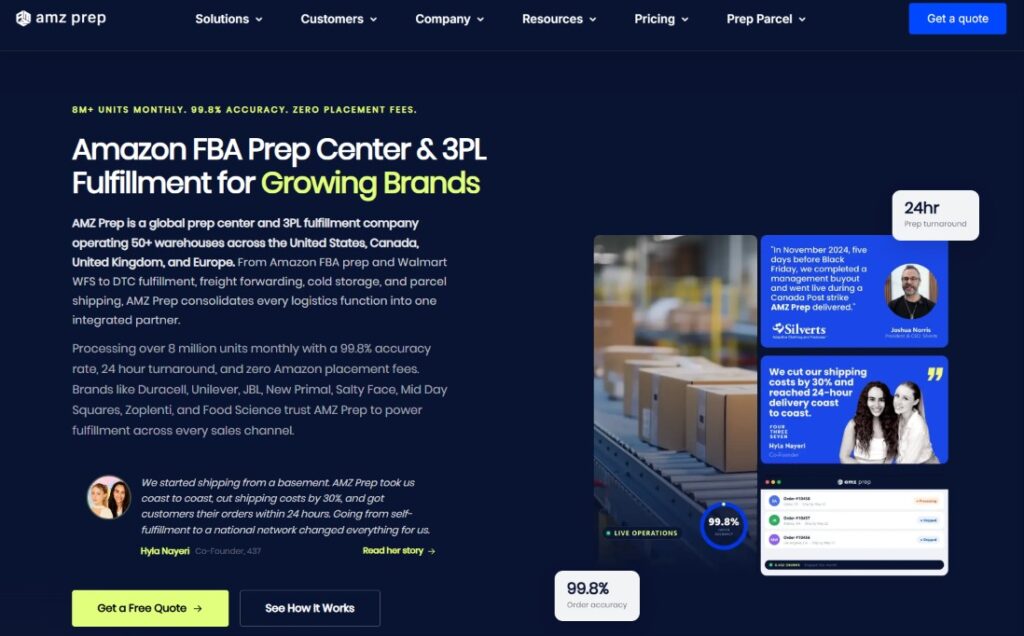
Quick answer: The best eCommerce order fulfillment services in 2026 are AMZ Prep, ShipBob, ShipMonk, Stord, Red Stag Fulfillment, and Amazon MCF.
How to choose a 3PL, in short: Shortlist providers that already run every channel you plan to sell on and can handle your product type. Compare speed in three parts: receiving time, same-day ship cutoff, and transit time. Ask each provider for a modeled monthly invoice built from about 90 days of your own order data to see your true cost per order, then check support: named contacts, written response times, and regular business reviews.
Your fulfillment partner shapes how fast orders reach customers, what each shipment costs, and how easily you add new sales channels.
This guide compares six top eCommerce fulfillment companies serving US brands. You will see each provider’s key features and best-fit use case.
Table of Contents
Best eCommerce Fulfillment Companies at a Glance
| Provider | Best for | Marketplaces and channels | Freight and Middle Mile | Cold storage |
|---|---|---|---|---|
| AMZ Prep | Brands scaling on Amazon plus DTC, retail, or B2B | Amazon, Walmart, TikTok Shop, Shopify, and all major marketplaces, plus retail and B2B | Yes, Middle Mile with 2–4 day Amazon inbound, plus LTL and FTL | Yes, cold storage and temperature controlled facility |
| ShipBob | DTC brands wanting distributed inventory | DTC, marketplaces including TikTok Shop, B2B with EDI | Yes | Yes |
| ShipMonk | Subscription, kitting, and apparel brands | DTC, B2B, retail, 100+ integrations | Yes | Yes |
| Stord | Mid-market and enterprise omnichannel brands | DTC, B2B retail, major retailer consolidation | Yes, TMS and freight services | Yes, cold chain |
| Red Stag Fulfillment | Heavy, bulky, and high-value goods | DTC and B2B retail | Yes, LTL and FTL outbound | Yes |
| Amazon MCF | Amazon-first brands adding a web store | Amazon plus off-Amazon web stores | Yes | No |
Top eCommerce Fulfillment Companies Compared
1. AMZ Prep
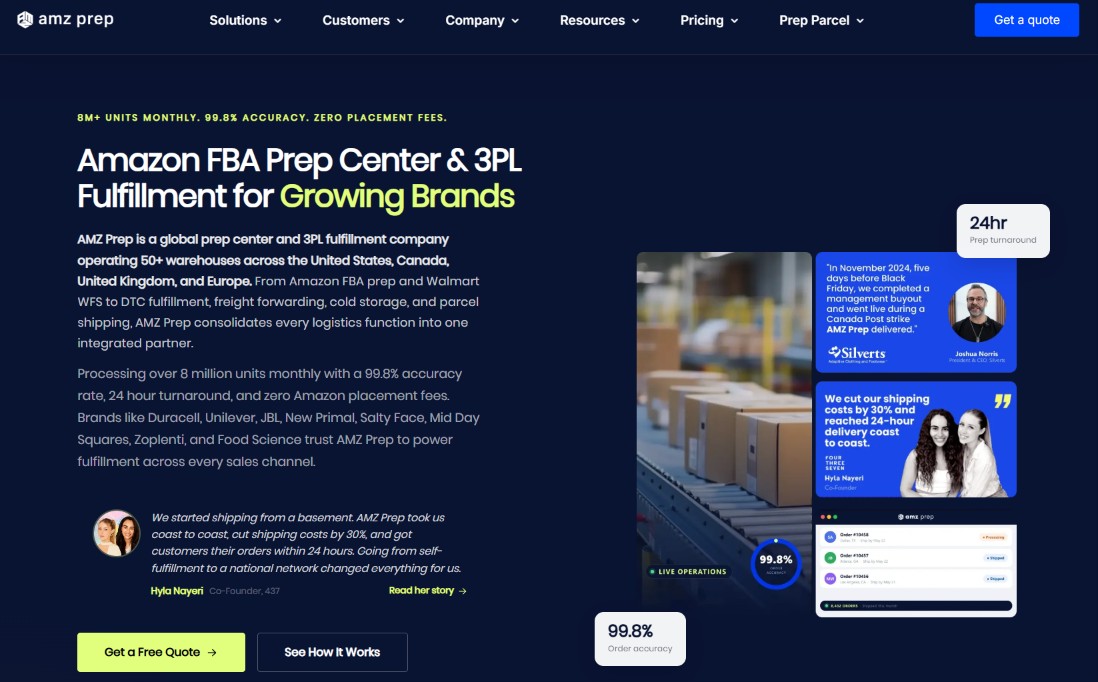
AMZ Prep is an ecommerce 3PL that serves 5,000+ brands, from fast-growing sellers to enterprise names, through 50+ fulfillment centers across 6 countries. Its client roster includes 437, Mid-Day Squares, New Primal, and Salty Face. AMZ Prep’s ecommerce order fulfillment runs Amazon, Walmart, TikTok Shop, Shopify, retail, and B2B orders from one shared inventory pool.
As an ecommerce 3PL provider, AMZ Prep handles big and bulky items like furniture, mattresses, and fitness equipment through the same network. Brands selling food, beverage, supplements, and other temperature-sensitive goods can use AMZ Prep’s cold storage and cold chain fulfillment.
Freight is built into AMZ Prep’s ecommerce order fulfillment services. AMZ Prep moves inventory by LTL and FTL from ports and manufacturers into its network. Its Middle Mile program then sends stock into Amazon with 2 to 4 day inbound times.
Prep Parcel gives brands access to AMZ Prep’s enterprise parcel rates without needing enterprise volume. Orders ship through a network of 35+ carriers with live rate shopping and regional carrier options.
Key features:
- FBA prep, labeling, kitting, and bundling built to Amazon’s requirements
- Middle Mile freight program with 2 to 4 day inbound times into Amazon
- LTL, FTL, and temperature-controlled freight through Middle Mile Plus
- Fulfillment for Amazon, Walmart, TikTok Shop, Shopify, and every other major marketplace
- Same-day delivery and subscription order fulfillment
- Seller Fulfilled Prime support for brands shipping Prime orders from their own inventory
- B2B and retail fulfillment with EDI and routing guide compliance
Best for: Growing brands that sell on Amazon alongside DTC, retail, or wholesale.
2. ShipBob
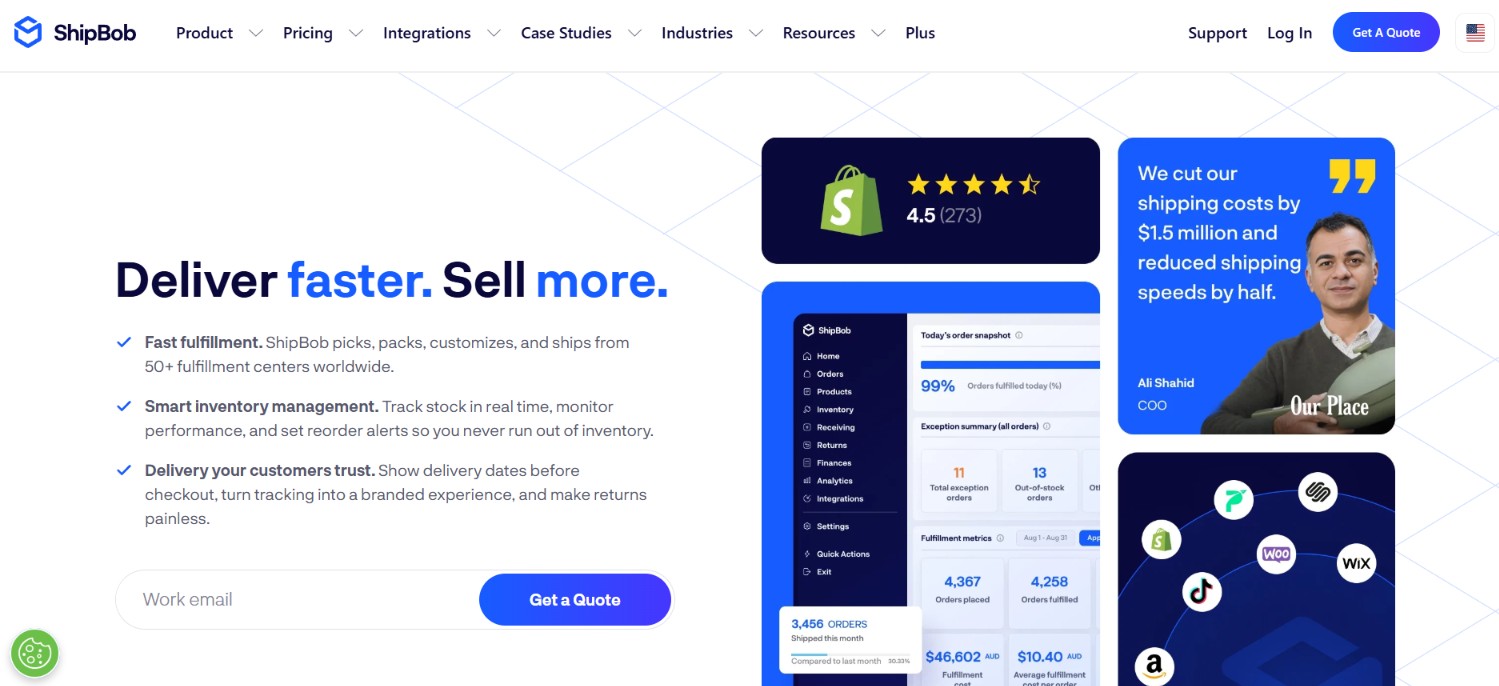
ShipBob runs 60+ fulfillment centers across the US, Canada, the UK, and the EU, among other markets. It is built for DTC brands that want inventory spread across many locations. Its software gives you one view of inventory and orders across channels.
The network suits brands that want to cut shipping zones by storing stock closer to customers. ShipBob can ship to more than 250 destinations worldwide from any of its fulfillment centers. It also offers a foreign trade zone warehousing model that lets brands defer duties on imported goods.
Key features:
- Distributed inventory across a large multi-node network
- 2-day continental US shipping coverage
- B2B fulfillment support and a standalone WMS option
- Foreign trade zone warehousing for duty deferral
- App store and API integrations for platforms, marketplaces, and ERPs
Best for: DTC brands with standard-size products that want broad US and international reach.
3. ShipMonk
ShipMonk runs fulfillment centers across the United States, Canada, Mexico, and Europe. Its own teams own and operate those facilities. It is known for handling operationally complex catalogs that need assembly, bundling, or detailed returns work.
Apparel is a major focus. Its KY2 facility in Kentucky offers 406,000 square feet dedicated to apparel. ShipMonk also offers duty deferral options and says it can fulfill up to 10,000 orders per day.
Key features:
- Subscription box and kitting workflows
- Apparel-focused infrastructure with in-house steam, retag, and rebag services
- Photo documentation on every non-new returned item
- Guaranteed SLAs and a stated 99.9% order accuracy rate
- 100+ integrations across eCommerce platforms and marketplaces
Best for: Subscription, kitting-heavy, and apparel brands.
4. Stord
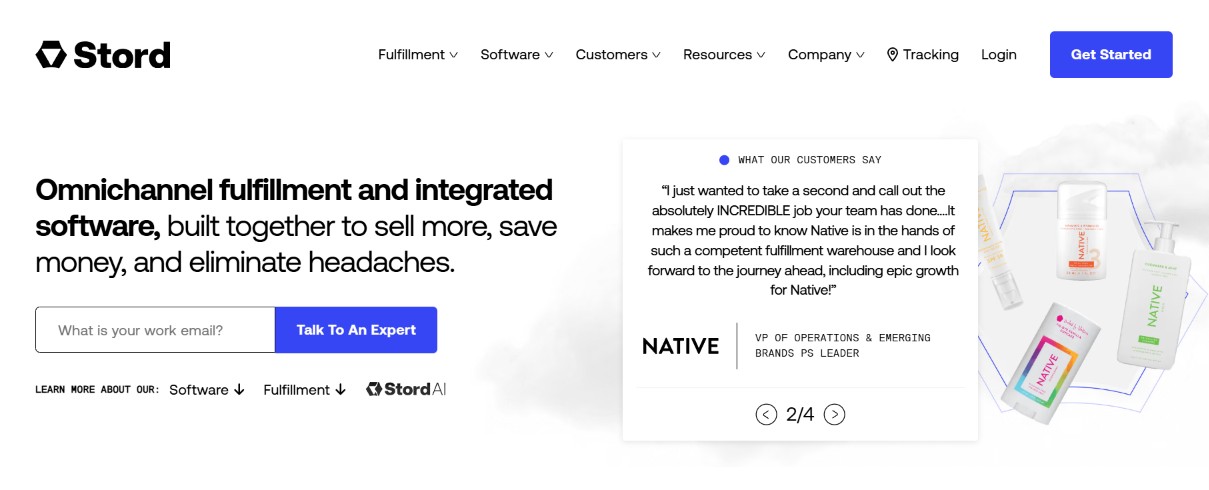
Stord focuses on mid-market and enterprise omnichannel brands. It pairs owned warehouses with a partner network of 1,000+ nodes. The company manages over $6 billion in commerce each year through its fulfillment, freight, and software services.
Stord has grown quickly through acquisitions. These include Pitney Bowes’ eCommerce fulfillment business in 2024, UPS subsidiary Ware2Go in 2025, and Shipwire from CEVA Logistics in January 2026. Named clients include AG1, quip, True Classic, and goodr.
Key features:
- Stord One software covering WMS, OMS, and TMS
- Company-run sites in the US, Canada, the UK, and the Netherlands
- Retail delivery consolidation for major retailers like Walmart and Target
- Post-purchase unboxing experiences through its Penny Black acquisition
- Support for DTC, B2B retail, cold chain, food and beverage, and CPG
Best for: Established brands that want fulfillment, freight, and software under one platform.
5. Red Stag Fulfillment
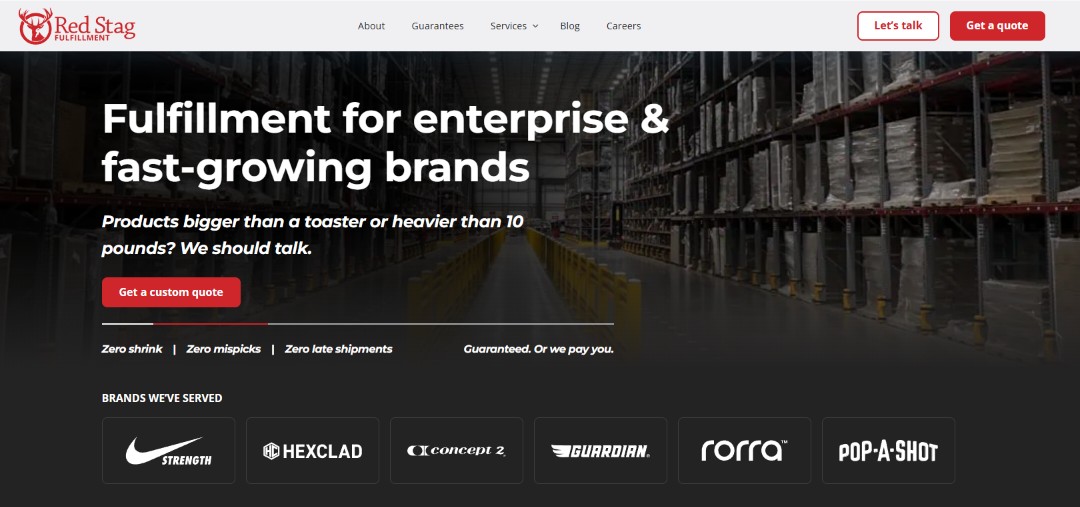
Red Stag Fulfillment specializes in big, heavy, bulky, and high-value products. It runs two warehouse hubs, one in Sweetwater, Tennessee and one in Salt Lake City, Utah. Together they reach 96% of the US population in 2 days by ground.
The company competes on accountability rather than node count. Its guarantees carry financial credits when it misses a commitment. Red Stag also uses a variable cost model with no monthly minimums, so you pay only for the storage and orders you use.
Key features:
- Guarantees on receiving within 2 business days, zero shrink, zero late shipments, and zero mispicks
- Handling for oversized, fragile, and high-value items, including lithium-ion certification
- LTL, FTL, and palletized shipment expertise
- Same-day shipping available and Seller Fulfilled Prime support
- US-based client support with direct operational contacts
Best for: Brands where each lost or damaged unit carries real cost.
6. Amazon Multi-Channel Fulfillment (MCF)
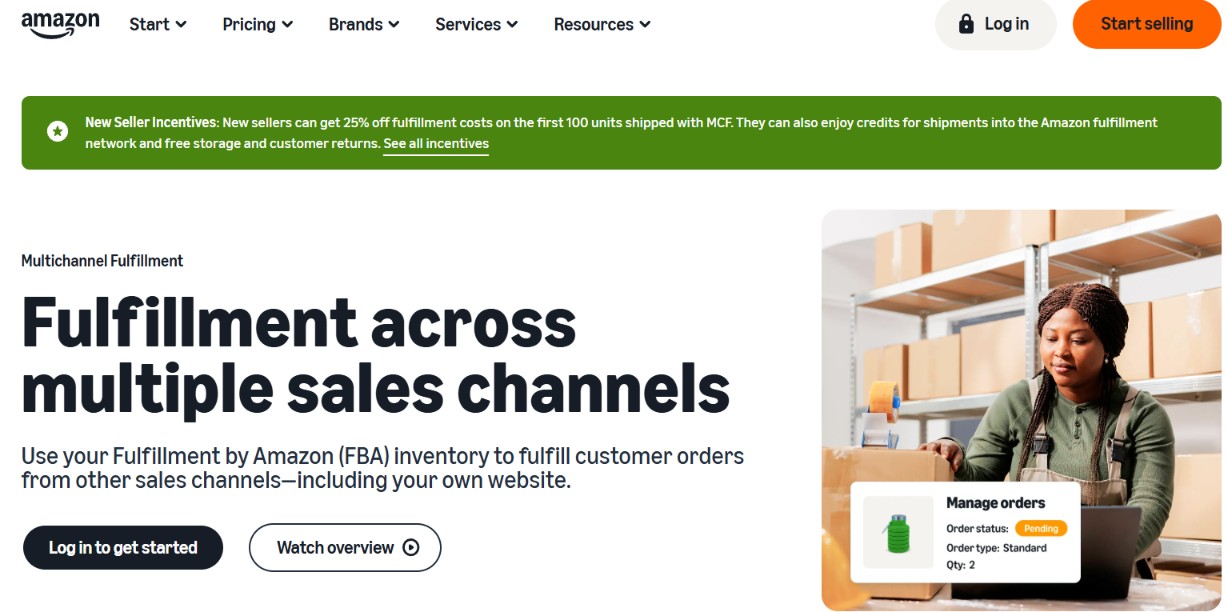
Amazon MCF lets you ship non-Amazon orders using inventory already stored in FBA. Setup moves fast because your stock is already in Amazon’s network. There is no separate warehouse to onboard or inventory to transfer.
MCF works well while other channels are still a small share of sales. As those channels grow, review packaging and branding options, carrier choice, and how fees scale on multi-item orders. Many brands use MCF as a first step before moving DTC orders to a dedicated 3PL.
Key features:
- Fulfills Shopify, website, and other channel orders from FBA inventory
- No separate warehouse onboarding required
- Access to Amazon’s delivery network
- One inventory pool shared across Amazon and off-Amazon orders
Best for: Amazon-first brands testing a direct website or new sales channel.
How to Choose an eCommerce Fulfillment Provider
Every provider above offers scalable eCommerce fulfillment in a different way. Four factors decide which one fits you.
Channel and product fit
Choose among eCommerce fulfillment partners that already run every channel on your 18-month plan. Share your largest, heaviest, and most delicate SKUs early. Confirm cold storage, kitting, or subscription support if your catalog needs it.
Speed
Break speed into three parts: receiving time, same-day ship cutoff, and transit time. Ask for written receiving SLAs and delivery estimates modeled on your customer ZIP codes. If you sell on Amazon, ask how long inbound shipments take to check in. In ShipBob’s 2026 report, 68.99% of brands said they aim to deliver domestic US orders in 2 to 3 days.
Pricing
Most 3PL fulfillment services charge for receiving, storage, pick and pack, packaging, shipping, and returns. A low pick fee can come with higher storage or postage costs. Send each provider 90 days of order data and ask for a modeled monthly invoice. That shows your true cost per order.
Support
Look for named contacts, written response times, and regular business reviews. Reference calls with brands in your category show how issues get handled.
Your 3PL Selection Checklist
- Live integrations and current clients on your channels
- Proven handling for your product type, including cold storage if needed
- A written receiving SLA with recent actual numbers
- A same-day cutoff and on-time ship rate from last peak season
- Delivery estimates based on your customer ZIP codes
- A modeled monthly invoice from your real orders
- Order accuracy rate and how it is measured
- Named contacts and a business review cadence
- Clear minimums, exit terms, and data ownership
Bottom Line
The right eCommerce fulfillment service provider matches how you sell today and where you plan to sell next. Speed, pricing, and channel fit carry the most weight. Build your evaluation on your own order data and compare total cost, not headline rates. Plan any move outside Q4 so your new partner is ready before peak season.
FAQs
What are eCommerce fulfillment services?
eCommerce fulfillment services store your inventory, pick and pack orders, ship them to customers, and process returns on your behalf.
What are the best providers of e-commerce fulfillment services in the USA?
The best US providers include AMZ Prep, ShipBob, ShipMonk, Stord, Red Stag Fulfillment, and Amazon Multi-Channel Fulfillment.
How much do eCommerce fulfillment services cost?
Costs vary by order profile. Most providers charge for receiving, storage, pick and pack, packaging, shipping, and returns separately.
How do you choose a 3PL provider?
Compare channel fit, product handling, receiving speed, total cost per order, and support structure using your own order data.
What is the difference between a 3PL and Amazon FBA?
Amazon FBA fulfills Amazon orders. A 3PL fulfills orders across multiple channels, including Amazon, DTC, retail, and B2B. For a deeper seller-focused view, see our Amazon 3PL guide.
When should a brand outsource eCommerce fulfillment?
Outsource when order volume outgrows your space, peak seasons strain your team, or new channels need specialized handling.