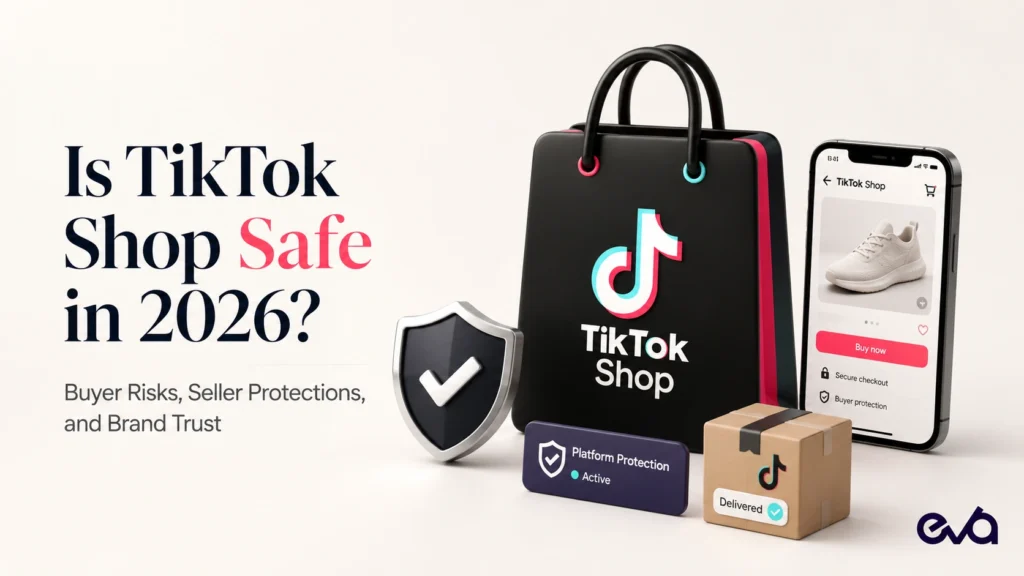
TikTok Shop includes platform controls such as secure checkout, order tracking, returns and refunds for eligible purchases, delivery protections, and seller policies. That does not make every listing or seller equally reliable. Buyers should keep payment and communication inside the platform, verify product and seller details, and use official support paths. Sellers should protect trust through accurate listings, compliant claims, reliable fulfillment, and responsive service.
This guide turns the search for is TikTok Shop safe into a business decision. It focuses on verifiable facts, operating tradeoffs, customer impact, and contribution margin. Platform features and policies change, so use the linked official sources and the live account as the final authority before implementation.
The recommended approach is deliberately cross-functional. A is TikTok Shop safe decision can affect acquisition, merchandising, inventory, payments, fulfillment, customer service, reporting, cash flow, and brand trust at the same time. Reading each section through only a marketing or technology lens can hide the operational cost. Use the article as a working checklist, then replace general assumptions with account-level data before taking action.
Table of Contents
- Quick decision framework
- How TikTok Shop protects transactions
- Recognize the limits of platform protection
- Check the seller and listing before buying
- Keep payment and communication on-platform
- Evaluate health, beauty, and regulated claims carefully
- Understand returns, refunds, and delivery issues
- What safety means for sellers
- Build compliant creator and affiliate workflows
- Create a brand protection response plan
- Implementation roadmap for is TikTok Shop safe
- Metrics that keep the decision honest
- Common mistakes to avoid
- Frequently asked questions
- Sources and further reading
- Build a trusted TikTok Shop operation
Quick decision framework
Before choosing a tool or changing a workflow, define the outcome, the owner, the available evidence, and the acceptable downside. For is TikTok Shop safe, a useful decision record states the current problem, baseline metrics, options considered, financial assumptions, risks, approval date, and review date. This prevents a popular tactic from becoming a permanent process without proof.
- Define the customer and commercial objective.
- Confirm current platform eligibility, policy, and pricing.
- Model total cost and contribution margin.
- Test with representative products, orders, and edge cases.
- Assign operational ownership and escalation paths.
- Measure the result against a documented baseline.
How TikTok Shop protects transactions
TikTok describes secure payment, return and refund processes, delivery guarantees, and a money-back guarantee for eligible situations in supported markets. Coverage, windows, exclusions, and procedures can change, so shoppers should read the policy attached to the actual order rather than relying on a screenshot or old video.
The practical implication is that teams need evidence at the level where the decision is made. Use a representative product, order, market, and customer journey; document exceptions; and separate platform capability from what has actually been configured in the account.
Recognize the limits of platform protection
TikTok Shop is a marketplace where independent sellers offer products. Platform tools can reduce risk and provide dispute paths, but they do not eliminate inaccurate descriptions, counterfeit attempts, shipping failures, or poor-quality products. A guarantee is a remedy framework, not a promise that every purchase will be perfect.
From an operating perspective, assign a named owner, a review cadence, and an escalation threshold. The process should explain what happens when data is missing, a policy changes, demand exceeds the forecast, or a customer outcome conflicts with the original assumption.
Check the seller and listing before buying
Review seller identity, shop history, ratings, recent written reviews, product details, price, delivery estimate, return eligibility, and the consistency of images and claims. Look for specific feedback from verified purchasers where available. Treat extreme discounts, vague specifications, and pressure to leave the platform as warning signs.
Financially, connect the choice to net revenue, variable cost, fixed cost, cash timing, and risk. A result can improve conversion or speed while still reducing contribution margin, so the scorecard must show both customer value and business value.
Keep payment and communication on-platform
Do not send money through an unrelated payment app, gift card, wire transfer, or external link presented in a message. Use TikTok Shop checkout and preserve order records. Report suspicious requests through official tools. Moving outside the platform can remove important evidence and may affect protection eligibility.
For measurement, capture a baseline before the change and keep the test window long enough to include refunds, returns, service contacts, and operational exceptions. Segment results by product, market, channel, and customer type when the blended average hides meaningful differences.
Evaluate health, beauty, and regulated claims carefully
Products touching health, cosmetics, supplements, safety, children, or electronics deserve extra scrutiny. Check ingredients, labeling, certifications where relevant, usage instructions, and the seller’s claims. Viral content is not independent evidence of safety or effectiveness.
For governance, write the source of truth, access roles, approval steps, and rollback route. Keep screenshots or exports only where permitted, record decisions, and review the control after launch. Clear ownership matters most when several apps, partners, or channels share the workflow.
Understand returns, refunds, and delivery issues
Read the order-specific return window and eligible reasons. Keep packaging and document damage or discrepancies promptly. Use the in-app order flow and meet evidence deadlines. If a parcel is late, missing, incorrect, or significantly different, follow the platform’s current delivery and refund process.
For customer experience, make promises understandable before purchase and achievable after purchase. Accurate content, realistic delivery or service expectations, accessible policies, and responsive support reduce preventable contacts and protect long-term trust.
What safety means for sellers
Brands earn trust by verifying product authenticity, controlling access, using accurate content, honoring delivery promises, and resolving problems quickly. They should monitor creator claims, counterfeit signals, unauthorized sellers, customer feedback, and policy updates. Trust is an operating discipline rather than a badge added to a profile.
The practical implication is that teams need evidence at the level where the decision is made. Use a representative product, order, market, and customer journey; document exceptions; and separate platform capability from what has actually been configured in the account.
Build compliant creator and affiliate workflows
Provide creators with approved product facts, required disclosures, prohibited claims, usage guidance, and escalation contacts. Review high-performing content for accuracy before amplifying it. Commission incentives should never encourage claims the product cannot support.
From an operating perspective, assign a named owner, a review cadence, and an escalation threshold. The process should explain what happens when data is missing, a policy changes, demand exceeds the forecast, or a customer outcome conflicts with the original assumption.
Create a brand protection response plan
Document how the team will capture evidence, report impersonation or counterfeit concerns, contact affected customers, pause risky campaigns, and correct content. Assign owners before an incident. A fast, transparent response can limit customer harm and preserve credibility.
Financially, connect the choice to net revenue, variable cost, fixed cost, cash timing, and risk. A result can improve conversion or speed while still reducing contribution margin, so the scorecard must show both customer value and business value.
Implementation roadmap for is TikTok Shop safe
Use the first thirty days to validate facts and repair foundations. Inventory the current is TikTok Shop safe workflow, collect current platform terms, map systems and owners, benchmark performance, and identify the highest-risk gaps. Do not automate a process that the team cannot explain manually.
During days thirty-one through sixty, run a controlled pilot. Select a limited assortment, market, campaign, or order segment; define success and stop conditions; test normal and exceptional cases; and review the output with marketing, operations, finance, technology, and customer service. Record every assumption that materially affects the result.
During days sixty-one through ninety, decide whether to scale, repair, or stop. Standardize the successful workflow, train owners, create dashboards, document escalation and rollback, and schedule a policy and economics review. Expansion should follow demonstrated accuracy and profit, not activity alone.
Metrics that keep the decision honest
| Metric group | What to monitor | Why it matters |
|---|---|---|
| Demand | Qualified traffic, conversion, orders, average order value | Shows whether the offer earns customer action |
| Economics | Net revenue, variable cost, acquisition cost, contribution margin | Separates profitable growth from expensive volume |
| Operations | Cycle time, error rate, stock availability, exceptions | Tests whether the workflow can scale reliably |
| Customer | Cancellations, returns, contacts, satisfaction signals | Reveals problems hidden by initial sales |
| Risk | Policy incidents, fraud or disputes, access changes, data failures | Measures the downside of the operating model |
Common mistakes to avoid
Common mistakes include selecting is TikTok Shop safe tactics from headline price or popularity, relying on outdated screenshots, measuring gross sales without total cost, scaling before edge-case testing, allowing unclear data ownership, and failing to document a rollback path. Another mistake is copying a competitor workflow without knowing its assortment, margins, team, contracts, or customer mix.
A disciplined team treats every recommendation as a hypothesis. It verifies the current policy, tests the customer journey, reviews financial and operational consequences, and changes course when the evidence is weak. This approach is slower at the first meeting and much faster when the business scales.
Frequently asked questions
Does TikTok Shop use secure payments?
TikTok says payments are processed through its supported secure checkout methods. Buyers should complete payment only inside the official app or website.
Can I get a refund?
Eligible orders may qualify under current return, refund, delivery, or money-back policies. The reason, timing, evidence, product type, and market can affect the outcome.
Are all TikTok Shop sellers verified?
Seller onboarding and policy controls exist, but buyers should still evaluate the individual shop, listing, reviews, and order terms.
How can I spot a scam?
Watch for off-platform payment requests, copied or inconsistent content, unrealistic discounts, vague policies, unsupported claims, and messages designed to create urgency.
Is it safe to buy beauty products?
Risk depends on the product and seller. Check ingredients, labeling, authenticity, reviews, return terms, and regulatory information relevant to your location.
How can brands improve trust?
Use accurate claims, reliable fulfillment, responsive support, controlled creator guidance, transparent policies, authentic reviews, and continuous monitoring.
Sources and further reading
- TikTok Shop management
- TikTok Shop affiliate guide
- creator selection guide
- TikTok Shop protections