Quick answer: TikTok Shop listing optimization is the work of making a product easy to find, easy to trust, and easy to buy inside a social-commerce journey. Strong listings connect search keywords, product titles, images, video context, descriptions, price, shipping, reviews, creator content, compliance, and inventory. The goal is not only a cleaner product page. The goal is better discovery, stronger conversion, and more profitable TikTok Shop growth.
TikTok Shop is not a smaller Amazon, and it is not only a checkout button under videos. It is a discovery engine, a creator ecosystem, a search surface, and a marketplace experience at the same time.
That means a weak listing can hurt performance in more than one place. A product title can limit search exposure. A vague image can reduce click-through. A thin description can leave creators unsure how to explain the product. A confusing offer can weaken checkout. A missing compliance detail can block scale. A product page that is not ready can make ads and creator content look worse than they really are.
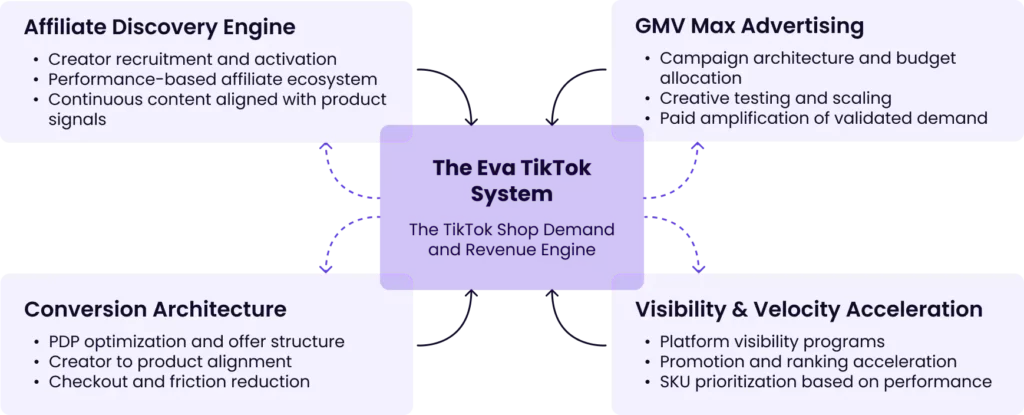
Eva manages TikTok Shop listings as part of Full-Service TikTok Shop Management. Listing work connects to TikTok Shop SEO, creator affiliates, ads, fulfillment, pricing, and conversion. One team should own the system, not just upload product data.
Table of Contents
What a TikTok Shop listing needs to do
A good TikTok Shop listing has to serve three audiences at once.
- The shopper: They need to understand what the product is, why it matters, what is included, how it works, whether it is trustworthy, and why now is a good time to buy.
- The platform: TikTok needs accurate, structured product data so the product can appear in relevant search, Shop Tab, product cards, recommendations, and shopping journeys.
- The creator: Creators need enough product clarity to make content that is accurate, persuasive, and consistent with the listing.
Most brands optimize only for the first audience. Strong TikTok Shop operators optimize for all three. That is why the listing is not a one-time setup task. It is a living conversion asset.
The 2026 TikTok Shop listing optimization checklist
Use this checklist before increasing creator seeding, affiliate commission, GMV Max, LIVE spend, Search Ads, or Shop Ads. Paid and creator traffic can expose a weak product page quickly.
1. Start with product-market fit by TikTok behavior
Not every product that sells on Amazon or Shopify is ready for TikTok Shop. The listing should match how the product is discovered and demonstrated in a short-form commerce environment. Products with visible transformation, clear use case, routine fit, replenishment behavior, strong before-and-after education, or simple demonstration usually have an easier path.
Before rewriting the listing, decide what kind of TikTok demand the product can capture: problem-solution, routine, impulse, comparison, gift, trend, creator proof, or search demand. That decision shapes the title, image order, description, and creator brief.
2. Build the title around search and shopper clarity
TikTok Shop Seller Center guidance emphasizes product titles because title quality can affect search exposure. A useful title should include the core product type, important differentiator, audience or use case, and relevant attributes without becoming unreadable.
- Lead with the product type shoppers actually search for.
- Add one or two high-value differentiators: size, material, ingredient, flavor, compatibility, target user, or bundle.
- Use natural keyword language instead of keyword stuffing.
- Avoid vague claims that do not help the shopper choose.
- Keep the title readable on mobile and useful for creators.
For example, “Hydrating Lip Balm” is too thin. “Hydrating Lip Balm Set, Unscented, Shea Butter, 3 Pack” gives the shopper and the platform more useful information.
3. Make the first image explain the product fast
The first image should make the product instantly recognizable. TikTok Shop is visual, but listing images still need ecommerce discipline. The product should be clear, centered, well-lit, and easy to understand at small mobile size.
Do not rely on a beautiful lifestyle image if the shopper cannot tell what is being sold. Use later images to show use case, ingredients, size, texture, comparison, package contents, routine, fit, or result. The image stack should answer the objections that would otherwise appear in comments, returns, or abandoned carts.
4. Write descriptions for trust, not filler
A strong description helps the shopper make a decision. It should explain what the product is, who it is for, what problem it solves, what is included, how to use it, what makes it different, and what expectations are realistic.
A weak description repeats generic phrases like premium quality, must-have, and viral favorite. That does not help the shopper or the creator. Better copy uses concrete details: material, size, compatibility, ingredients, scent, color, care instructions, package count, routine timing, warranty, and shipping expectations.
5. Align listing claims with content policy
TikTok Shop policies require listings and promotional content to be clear, truthful, and compliant. This matters because creators often repeat the listing’s claim language in videos and LIVEs. If the listing overpromises, the content ecosystem can amplify the risk.
Review claims before scale. Health, beauty, supplements, baby, electronics, food, and regulated categories need extra care. Use compliant benefit language, avoid unsupported medical claims, and make sure images and demos accurately represent the product.
6. Connect the listing to creator content
TikTok Shop listings and creator content should teach each other. If creators keep explaining the same feature in successful videos, the listing may need to make that feature clearer. If comments ask the same question, the PDP needs a better answer. If creators avoid a product because the value is hard to explain, the title, image stack, and description may need work.
This is why TikTok Shop affiliate management and listing optimization should not be separate workflows. The creator brief, listing page, product card, and fulfillment promise should tell the same story.
7. Use listing quality tools, but do not outsource judgment
TikTok Shop Seller Center has listing-quality and product-optimizer workflows that can help sellers identify missing fields, title opportunities, and product information gaps. These tools are useful, especially for large catalogs.
But tools do not replace strategy. A tool may suggest fields or keywords. The operator still needs to decide which search intent matters, which proof points convert, which creator angle is believable, which product images reduce friction, and which products deserve traffic.
8. Price and offer must match the social-commerce moment
TikTok Shop buyers often move quickly from content to checkout. A confusing price, unclear discount, weak shipping promise, or unattractive bundle can break momentum. The listing should make the offer easy to understand without training shoppers to wait for deeper discounts.
Good operators test bundles, first-order offers, limited-time promos, free shipping thresholds, affiliate commission, and LIVE offers together. The goal is not only more GMV. The goal is profitable GMV that can scale without destroying margin.
9. Fulfillment and returns are part of conversion
A listing can look strong and still underperform if shipping expectations are weak or returns are unclear. Delivery promise, inventory availability, package accuracy, and returns experience influence trust. They also affect whether the product can sustain creator-driven spikes.
Before pushing a listing with ads or affiliates, review fulfillment readiness. For more detail, see Eva’s TikTok Shop Fulfillment guide.
10. Measure listing performance by the full funnel
Listing optimization should be measured across discovery, click, conversion, creator performance, returns, and margin. A title change that improves search exposure but attracts the wrong shopper is not a win. An offer that lifts conversion but weakens margin is not a win. A creator video that drives traffic to a PDP that cannot convert is a missed opportunity.
Track impressions, search exposure, click-through, PDP conversion, add-to-cart, orders, refund rate, affiliate performance, ad efficiency, product margin, inventory coverage, and repeat purchase. The best listing work makes every other growth lever perform better.
What to fix first by symptom
| Symptom | Likely issue | First fixes |
|---|---|---|
| Low search exposure | Title, category, attributes, or keyword alignment is weak. | Rewrite title around product type, buyer terms, core attributes, and category relevance. |
| Views but weak product clicks | Image, price, or product promise is unclear. | Improve first image, offer clarity, product hook, and proof signals. |
| Clicks but weak purchases | PDP does not answer objections. | Add better images, use-case detail, size, ingredients, shipping, reviews, and trust language. |
| Creator traffic does not convert | Content promise and listing promise do not match. | Align creator brief, product card, PDP title, image order, and offer. |
| Orders rise but returns rise too | Listing is overpromising or missing expectation details. | Clarify size, use case, compatibility, package contents, limitations, and care instructions. |
| Ads spend but GMV does not hold | Listing, offer, or fulfillment cannot support scale. | Fix PDP conversion, inventory depth, shipping promise, and margin before raising budget. |
How Eva manages TikTok Shop listing optimization
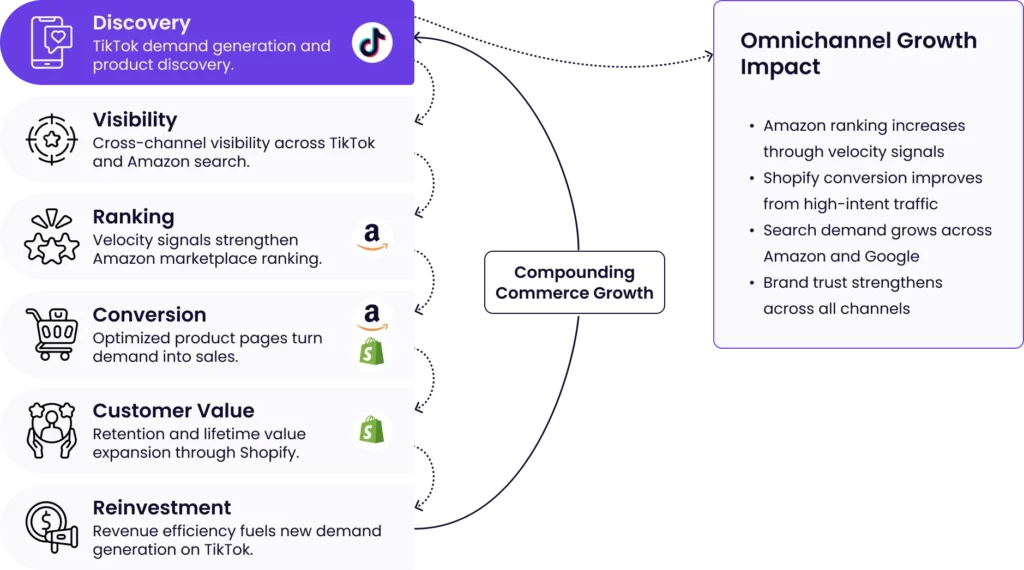
Eva treats listing optimization as part of the TikTok Shop growth system. The listing is connected to search, creator content, affiliate management, GMV Max, Spark Ads, LIVE, fulfillment, inventory, and margin.
That matters because most TikTok Shop problems are cross-functional. A product may need stronger titles and images before ads scale. A creator program may need better product education before affiliates produce consistent content. A discount may lift orders while hurting margin. A listing may need shipping clarity before conversion improves. A catalog may need product-priority rules before the team decides what to seed or advertise.
Eva connects TikTok Shop Management, TikTok Shop SEO, TikTok Shop Ads, LIVE Ads, category strategy, and TikTok Shop launch execution. The listing is not isolated. It is the conversion surface for the whole system.

TikTok Shop listing optimization FAQ
What is TikTok Shop listing optimization?
TikTok Shop listing optimization is the process of improving product titles, images, descriptions, attributes, price, trust signals, creator context, and compliance so products are easier to discover and easier to buy.

Do TikTok Shop product titles affect search?
Yes. TikTok Shop Seller Center guidance emphasizes product titles and recommended keywords because title relevance can help products match buyer searches. The title should be clear, descriptive, and useful, not stuffed with repeated phrases.
What should be included in a TikTok Shop product description?
A product description should explain what the product is, who it is for, how to use it, what is included, key materials or ingredients, sizing or compatibility, shipping expectations, and realistic benefit language.
Should brands optimize TikTok Shop listings before running ads?
Yes. Ads and creator content can drive attention, but weak titles, images, descriptions, offers, or fulfillment promises can waste that attention. Fix listing fundamentals before scaling spend.
How often should TikTok Shop listings be updated?
Priority listings should be reviewed monthly and after major changes in search exposure, creator content, ad spend, conversion rate, returns, inventory, pricing, or customer questions.
Sources and further reading
- TikTok Shop Seller Center: Product Detail Pages and Listing Quality Guidelines
- TikTok Shop Seller Center: Product Listing, What You Need to Know
- TikTok Shop Seller Center: Product Listing Policy
- TikTok Shop Seller Center: Optimizing Product Titles
- TikTok Shop Seller Center: Upgrading Your Listing Quality
- TikTok Ads Manager: Search Ads Campaign Tools