Table of Contents
- Introduction
- What Influences Amazon Advertising Costs?
- Amazon’s Ad Pricing Models Explained
- Types of Amazon Ads and Their Costs
- How Does Bidding Work on Amazon?
- Setting a Realistic Daily Budget for Amazon Ads
- How to Optimize Your Amazon Ad Spend
- What Happens if You Don’t Advertise on Amazon?
- How Eva Can Help?
- Conclusion
- Worked monthly budget: media is not the full cost
- How much can an Amazon ad click cost before profit disappears?
- FAQs
Introduction
In today’s highly competitive eCommerce landscape, more than simply listing products on Amazon is needed.
Brands need to leverage Amazon’s advertising platform to stand out and drive sales truly. However, managing the costs associated with running Amazon ads can be complex.
Understanding these costs and optimizing your budget can empower you, making all the difference between profitable ad campaigns and wasted spending.
This comprehensive guide covers everything you need to know about the cost of running Amazon ads, the different pricing models, and strategies to help brands optimize their ad spend.
We’ll also highlight how Eva’s AI-powered platform provides the tools necessary to achieve profitable growth on Amazon and across other marketplaces, giving you the confidence that you’re making the right decisions.
What Influences Amazon Advertising Costs?
Several factors affect the cost of advertising on Amazon. These elements significantly affect how much you will spend on ads, and they fluctuate based on your product, competition, and the type of ad you choose.
Product Category
Category, query, placement, and competing bids can affect CPC. Use the account’s current results rather than assuming a particular category always costs more.
Ad Type
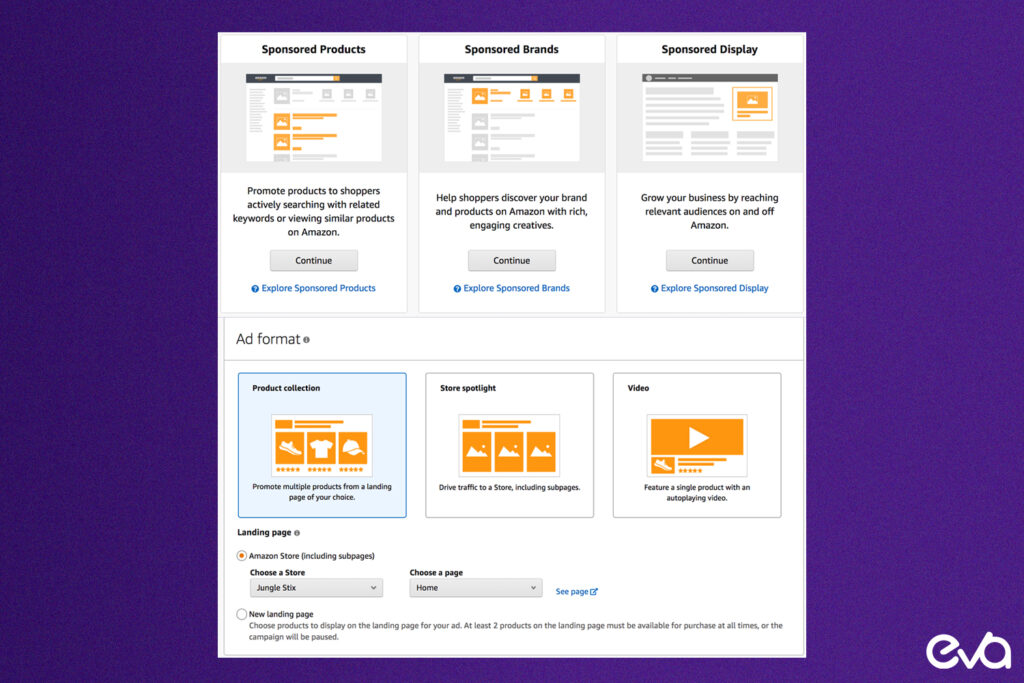
The cost of advertising depends on the type of ad you choose. Amazon offers various formats, such as Sponsored Products, Sponsored Brands, and Sponsored Displays, each with its own pricing model.
Bidding Strategy
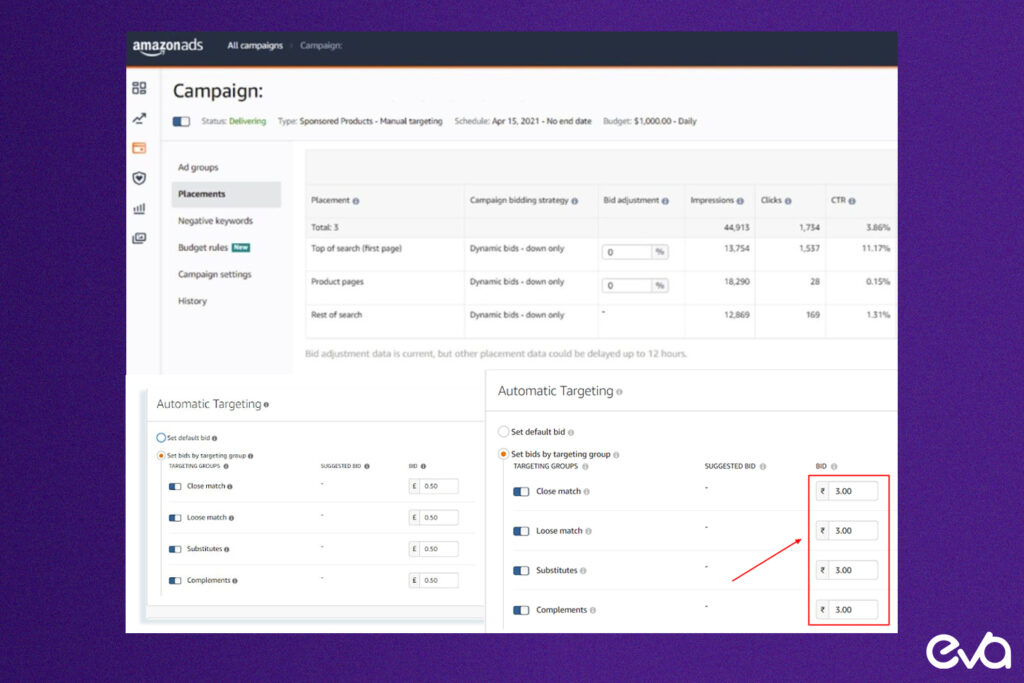
Targeting and bidding are separate decisions. Automatic targeting lets Amazon match ads to relevant searches and products; manual targeting lets the advertiser select targets. Fixed or dynamic bidding controls how bids are applied, while additional adjustments can change the effective bid.
Competition
The more competitors bidding on the exact keywords, the higher the advertising cost. Due to heightened competition during peak shopping seasons like Prime Day or Black Friday, CPC can increase. By staying vigilant and adjusting your bids accordingly, you can stay ahead of the game.
Seasonality
Ad costs often rise during major sales events and holidays. Sellers must prepare for higher costs during these periods and adjust their ad strategies accordingly.
Amazon’s Ad Pricing Models Explained
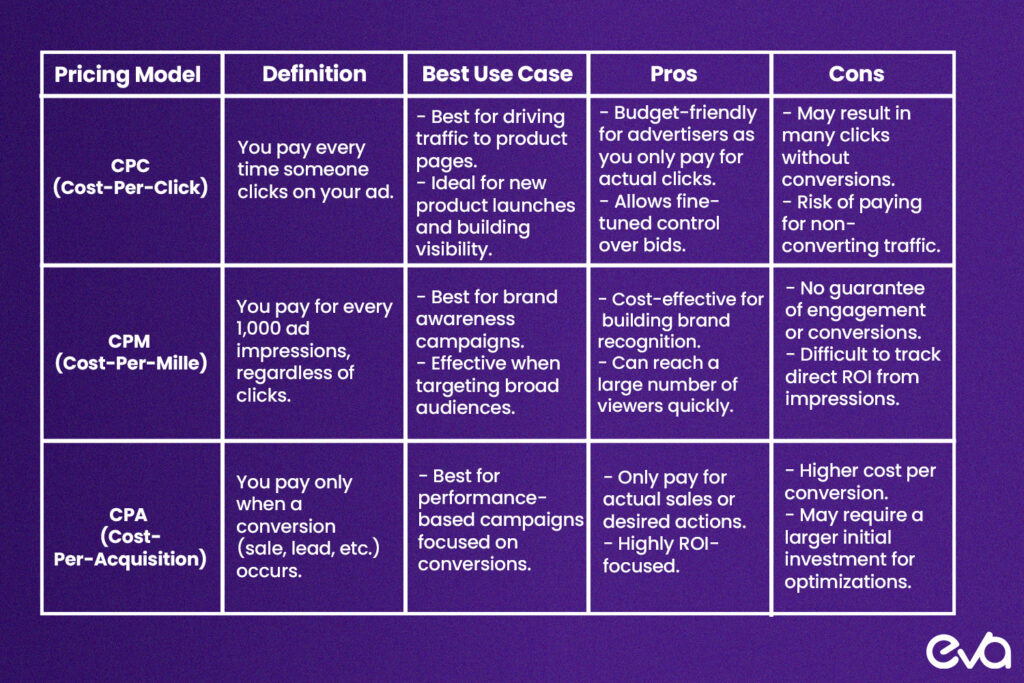
Amazon uses multiple pricing models for its ads. Understanding these models is crucial for setting up campaigns that fit your budget.
Cost-Per-Click (CPC)
CPC billing charges for clicks. Sponsored Products uses CPC; Sponsored Brands and display campaigns can also offer viewable-impression billing. Confirm the selected cost type before comparing campaign costs.
Cost-Per-Thousand Impressions (CPM)
In CPM, you are charged based on every 1,000 impressions your ad receives, regardless of clicks. This model is often used for Amazon DSP (Demand-Side Platform) campaigns.
Cost Per Acquisition as a Planning Metric
Cost per acquisition can be calculated as spend divided by attributed acquisitions. A campaign optimized toward an acquisition-cost target does not necessarily bill only when a purchase or sign-up occurs. Check the product’s contracted billing basis separately.
Types of Amazon Ads and Their Costs
Amazon ad formats use different billing models. The descriptions below explain those models rather than presenting a universal rate card. Any rates in the retained historical illustration are not current Amazon price quotes or validated planning benchmarks.
Sponsored Products
Sponsored Products promotes individual product listings on a CPC basis. Actual CPC depends on the auction and campaign settings, not a fixed published price range.
Sponsored Brands
Sponsored Brands supports CPC and cost per thousand viewable impressions (vCPM). Use the campaign’s selected billing model and observed costs rather than an unsupported average CPC range.
Sponsored Display
Amazon’s display ads guide describes CPC and vCPM billing options. Costs depend on the selected setup and auction; remarketing is one use case, not the format’s only purpose.
Amazon DSP
Amazon DSP supports programmatic buying across multiple formats and supply sources. Pricing varies by placement and commercial setup; media costs and any service commitments should be confirmed for the actual plan rather than inferred from a universal CPM range.
How Does Bidding Work on Amazon?
Amazon’s advertising platform operates on an auction-based system, where sellers bid on keywords to gain ad placements. The amount you bid plays a significant role in determining your ad’s visibility.
Automatic vs. Manual Targeting
- Automatic targeting: Amazon selects relevant keyword and product matches. Review the resulting search-term and product performance.
- Manual targeting: Select keywords or products explicitly. The campaign’s bidding strategy and bid adjustments remain separate controls.
Bid Optimization Strategies
- Monitor Competitors: Keep an eye on competitor activity and adjust bids accordingly.
- A/B Testing: Regularly test different bidding amounts to see which provides the best performance at the lowest cost.
- Adjust for Peak Seasons: Increase bids during high-traffic periods to stay competitive.
Setting a Realistic Daily Budget for Amazon Ads
Setting a realistic daily budget is one of the most critical steps in running successful Amazon ads. Your budget depends on product type, competition, and advertising goals.
Hypothetical Budget Choices, Not Minimums
- Illustrative $30 daily budget: Decide which eligible product and question the test will cover before assigning the budget.
- Illustrative $100 daily budget: Allocate only when the intended tests and product economics justify the larger commitment.
- Illustrative $200 daily budget: More budget does not secure a ranking or make an unprofitable click affordable. Check stock and contribution before increasing spend.
How to Optimize Your Amazon Ad Spend
Optimizing your ad spend ensures your campaigns remain profitable while driving the desired traffic and sales. Below are some best practices for reducing costs without compromising on ad effectiveness:
Keyword Optimization
Use relevant, high-converting keywords in your ads and continuously monitor performance to remove non-performing ones.
Negative Keywords
Exclude keywords that attract irrelevant traffic. This reduces unnecessary ad spend and improves ROI.
A/B Testing
Regularly test different ad variations, such as headlines, images, and targeting options, to find the best-performing combinations.
Adjust Bids Based on Performance
Adjust your bids using real-time data. Increase them for high-performing keywords and lower them for those that aren’t driving conversions.
Seasonal Adjustments
During high-demand periods, such as Black Friday or Prime Day, increase your ad spend to capitalize on increased traffic, but ensure your campaigns are optimized for maximum ROI.
What Happens if You Don’t Advertise on Amazon?
Relying solely on organic search to drive traffic can be a slow process. If you decide not to advertise on Amazon, here’s what you risk:
- Lower Visibility: Without ads, your products are less likely to appear at the top of search results, especially in competitive categories.
- Slower Sales Growth: Advertising helps boost sales velocity, improving organic rankings. With ads, sales growth can continue.
- Missed Opportunities: Amazon ads allow you to retarget shoppers and boost brand awareness. Skipping ads means missing out on these opportunities.
How Eva Can Help?
Managing Amazon advertising effectively can be overwhelming, but Eva Commerce provides the ideal solution for brands looking to optimize their ad spend and achieve profitable growth.
Eva’s AI-powered platform integrates critical business metrics like inventory levels, conversion rates, and profitability to create a context-aware advertising solution beyond standard ad management tools. Here’s how Eva can help:
AI-Driven Ad Strategy Optimization
Eva’s AI platform continuously analyzes performance data across all marketplaces, providing actionable insights that help brands allocate their ad spending more effectively. Whether adjusting bids or refining keyword targeting, the platform ensures your ad campaigns are continually optimized for maximum efficiency.
Automated Bid Adjustments
With Eva’s automated bid adjustments, brands no longer need to spend time manually optimizing bids. The AI system dynamically adjusts bids in real time, ensuring your ads remain competitive while staying within your budget.
Cross-Marketplace Integration
Eva’s platform isn’t just limited to Amazon. As an Amazon Advanced Partner and Walmart Strategic Solution Partner, Eva allows you to run ad campaigns across multiple marketplaces, including Walmart, eBay, TikTok, and Shopify. This holistic approach ensures your brand maintains a strong presence across various platforms.
Maximizing ROI with Data-Driven Decisions
Eva’s AI platform integrates inventory, conversion rates, and profitability metrics to optimize your ad spend for profitability. Eva helps brands make informed decisions that maximize ROI by leveraging real-time data.
If you’re ready to take control of your advertising strategy and boost your brand’s growth on Amazon, visit Eva to learn more about our AI-powered platform.
Related Eva guide: Review the Amazon advertising agency evaluation guide when management quality is part of the true advertising cost.
Conclusion
Amazon advertising is an investment that, when managed effectively, can yield substantial returns.
By understanding the factors influencing your ad spend and leveraging tools like Eva’s AI-powered platform, brands can navigate the complexities of Amazon advertising and maximize their ROI.
Whether you’re just starting or looking to scale, advertising on Amazon is critical to any successful e-commerce strategy.
When combined with data-driven insights and optimized bidding strategies, Amazon ads can drive significant growth and profitability for your brand.
Related Eva guide: Cost control begins with the role and economics of each advertised product. Continue with Eva's Sponsored Products strategy for 2026 for the operating framework.
Worked monthly budget: media is not the full cost
Illustrative worksheet, not Eva pricing, an Amazon quote or a client result. Assume $60,000 net product revenue and $36,000 variable product, marketplace, fulfillment, discount and expected-return costs. That leaves $24,000 contribution before advertising and management. Do not subtract a discount or return twice if it is already deducted from net revenue.
- Media: $12,000.
- Management: $3,000 fixed fee assumed solely for this example.
- Creative production: $1,000 allocated to this month.
- DSP technology charges: $300 assumed.
- Audience/data or measurement charges: $200 assumed.
Total advertising-related cost is $16,500. Remaining contribution is $24,000 minus $16,500, or $7,500 before fixed overhead and tax. Media-only accounting would show $12,000 remaining and overstate this contribution by $4,500. The worksheet is an accounting scenario, not evidence that ads caused all $60,000 of revenue.
At the same 40% contribution rate and fixed $16,500 spend assumption, $41,250 net revenue covers these costs before overhead. If net revenue falls to $50,000 while costs stay as modeled, remaining contribution falls to $3,500. Recalculate when fee tiers, purchased-product mix, returns or creative timing change.
Amazon distinguishes DSP fee categories. Confirm your actual contract and invoice: a fee already included in a platform total must not be counted again. Compare PPC management with DSP management using the same full-cost definition.
How much can an Amazon ad click cost before profit disappears?
An affordable Amazon ad click depends on the contribution available from an order and the probability that a click produces that order. There is no universal profitable CPC. Start with product economics, reserve the profit required after advertising, and use observed conversion data to set a testable spending limit.
Amazon’s Sponsored Products documentation confirms CPC billing with no monthly or upfront campaign fee. Sponsored Brands also supports viewable-impression billing. Keep billing models separate when comparing results, and distinguish media charges from agency fees, creative costs, and software subscriptions.
Hypothetical calculation: a $40 product
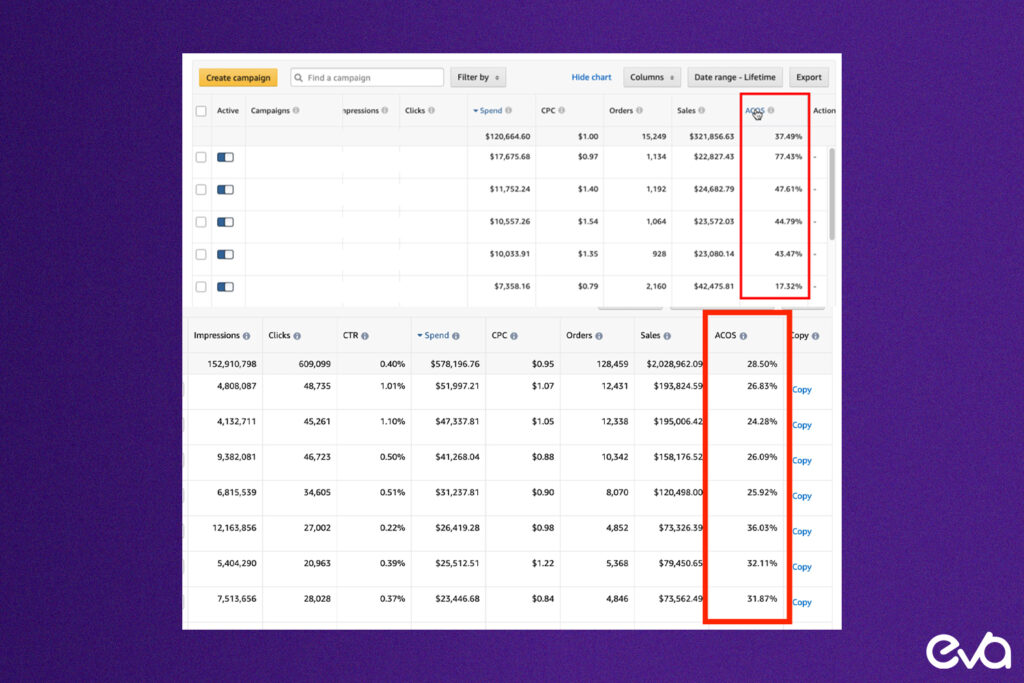
Assume a $40 order leaves $12 after product cost, marketplace fees, fulfillment, discounts, and an allowance for returns, but before advertising. The brand wants to retain $4 contribution per order after media spend. That leaves an $8 advertising allowance. At an assumed 10% click-to-order conversion rate, the planning CPC ceiling is $0.80: $8 multiplied by 0.10.
If conversion falls to 5%, the same allowance supports only $0.40 per click. Paying $0.80 would then imply $16 media cost per order, exceeding the $12 available before advertising. Raising the daily budget cannot repair that unit-economics problem. The decision is to reduce effective bids, improve conversion or margin, or explicitly fund a bounded acquisition test. All inputs are hypothetical and assume one comparable order per conversion.
Recalculate with matured attribution data and the actual purchased-product mix. The calculated CPC is an average-cost planning limit, not a guarantee that a base bid will hold every auction to that price. Amazon’s Sponsored Products bidding guidance separates targeting choices from dynamic bidding and bid adjustments; review those controls before changing spend.
For campaign structure, use the Sponsored Products strategy guide. For the full contribution model, use the Amazon Profitability Playbook. Eva’s Amazon PPC management connects those economics to bidding, targeting, and budget decisions.
Want help keeping Amazon ad costs in line with profit? Eva’s Amazon PPC management services set bids, budgets, and targeting for Sponsored Products, Sponsored Brands, and Sponsored Display against your margin and ACoS goals. Or book a call to review your account.
FAQs
There is no single cost that applies to every Amazon campaign. Sponsored Products bills for clicks, while other formats can use impression-based billing. Use current campaign data by product, query, placement, and cost type instead of treating an unsupported CPC range as a rate card.
You can reduce Amazon ad spend by optimizing keywords, using negative keywords to exclude irrelevant traffic, and adjusting bids based on performance. Tools like Eva’s AI-powered platform help automate and optimize these processes.
Amazon offers several ad types, including Sponsored Products, Sponsored Brands, Sponsored Display, and Amazon DSP. Each has its own pricing model and objectives.
Set a budget from the product’s contribution, campaign objective, expected click cost, and affordable test exposure. Company size alone does not determine the right amount. Sponsored Products daily budgets are averaged over a calendar month, so review the applicable controls rather than assuming identical spending each day.
Amazon ads use auctions, with relevance and bids influencing delivery. For Sponsored Products, automatic or manual targeting determines how targets are selected. Fixed or dynamic bidding and any bid adjustments govern bid behavior; a higher bid does not guarantee a particular placement or profit.
Eva’s AI-powered platform optimizes ad campaigns by integrating inventory levels, conversion rates, and profitability metrics. This ensures your advertising efforts are efficient and yield the highest ROI possible.
Amazon ads help boost visibility and sales faster than relying on organic traffic alone. Advertising allows you to target specific keywords and shoppers, giving your products a competitive edge.
Yes, Eva’s platform supports advertising across multiple marketplaces, including Amazon, Walmart, eBay, TikTok, and Shopify, ensuring consistent growth across channels.
Negative keywords are terms that you exclude from your campaigns to prevent irrelevant clicks. By using negative keywords, you ensure your ads are only shown to relevant audiences, reducing wasted ad spend.
Amazon ad costs tend to rise during peak shopping seasons like Prime Day, Black Friday, and the holiday season. Adjusting your ad strategy and budget for these periods can help you remain competitive without overspending.
Ready to lower your ACoS and scale profitably?
Eva’s Amazon PPC management combines AI-driven bidding with hands-on strategy to maximize returns on every ad dollar. See how we’ve helped brands cut wasted spend and grow revenue.
Explore Eva’s Amazon PPC Service →