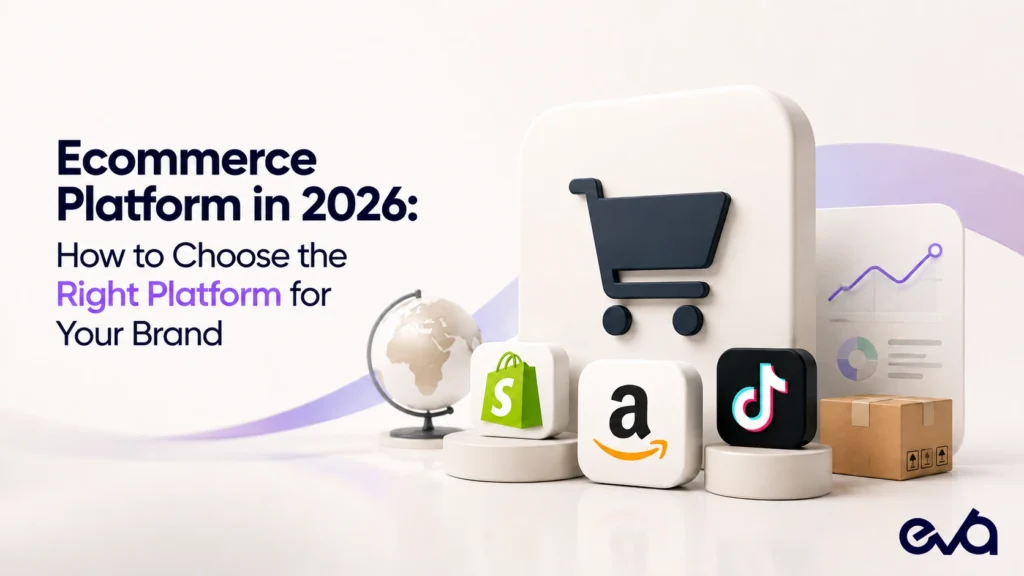
The right ecommerce platform is the one that supports your current operating model and the next stage of growth without creating unacceptable cost, data, or workflow constraints. Compare platforms with a weighted scorecard covering merchandising, checkout, payments, integrations, international selling, analytics, security, support, and total cost of ownership. A familiar name is not automatically the best fit.
There is no single best ecommerce platform for every company. The correct shortlist changes with business model, catalog, countries, B2B requirements, physical retail, internal engineering, customer-acquisition strategy, and the amount of operational control the brand truly needs. This guide compares the principal platforms buyers encounter in 2026 without pretending that every product belongs in the same category or solves the same operating problem.
Scope note: hundreds of regional and specialist commerce products exist. The comparison below covers the major global, enterprise, composable, open-source, website-builder, creator, and integrated-suite options most likely to appear in a serious evaluation. It also explains why Amazon, Walmart Marketplace, TikTok Shop, Etsy, and eBay are sales channels rather than replacements for a brand-owned commerce platform.
Table of Contents
- Ecommerce platform comparison at a glance
- Eva Commerce Platform Benchmark 2026
- The Eva Commerce 5D Platform Framework
- How the major ecommerce platforms compare
- Shopify vs WooCommerce vs BigCommerce
- Shopify Plus vs Adobe Commerce vs Salesforce Commerce Cloud
- When composable commerce is justified
- Best ecommerce platform by business scenario
- Marketplaces are channels, not your ecommerce platform
- Use a weighted selection scorecard
- Total cost of ownership: what buyers forget
- Migration and SEO risk
- Final platform-selection checklist
- Frequently asked questions
- Official platform resources
- Choose the right commerce architecture
Ecommerce platform comparison at a glance
| Platform family | Names to shortlist | Best when | Main tradeoff |
|---|---|---|---|
| Hosted SaaS | Shopify, Shopify Plus, BigCommerce | The brand values speed, managed infrastructure, and an established ecosystem | Subscription, app, and platform boundaries |
| Website builders | Wix, Squarespace, Square Online, Ecwid, Webflow, Big Cartel | A smaller business values simple site creation or an existing design/POS ecosystem | Advanced operations and catalog complexity |
| Open source | WooCommerce, PrestaShop, OpenCart, Shopware, Medusa, Saleor | The organization wants code or hosting control and can maintain it | Security, upgrades, engineering, and integration ownership |
| Enterprise suites | Adobe Commerce, Salesforce Commerce Cloud, SAP Commerce Cloud, Oracle Commerce, VTEX | Global, B2B, omnichannel, or ecosystem complexity justifies enterprise investment | Implementation time, specialist skills, and total ownership cost |
| Composable | commercetools, Spryker, Elastic Path, Shopware, Medusa, Saleor | Differentiated experiences and complex architecture justify modularity | The buyer owns orchestration and multiple vendor relationships |
| Integrated suites | Odoo, Square, SHOPLINE, CS-Cart | Commerce must connect tightly with a wider operating or marketplace model | Depth and regional fit vary by module |
Eva Commerce Platform Benchmark 2026
Eva Commerce reviewed 27 named ecommerce platforms using official product documentation and a consistent editorial research method. The quantitative layer below uses DataForSEO Labs estimates for one representative Google query per platform in the United States, English language, with clickstream data disabled. The snapshot was collected on August 23, 2026; the underlying keyword records were most recently updated between July and August 2026.
This is an Eva Commerce editorial benchmark prepared for platform discovery and shortlist planning. It is not a controlled performance experiment, customer-outcome study, or market-share report. Search volume measures estimated query demand; KD estimates organic ranking difficulty. Neither metric proves that a platform is better, larger, more profitable, or suitable for a particular merchant. Brand terms can also contain navigational or non-commerce ambiguity.
Benchmark methodology
- Define a consistent set of 27 platforms already covered in this guide.
- Review each platform’s official product positioning and architecture.
- Select one representative platform or brand query.
- Collect US monthly search volume, keyword difficulty, and classified intent from DataForSEO Labs.
- Interpret demand only as a discovery signal—not as platform quality or merchant fit.
- Apply the Eva Commerce 5D Platform Framework before recommending a shortlist.
US search-demand benchmark for 27 ecommerce platforms
| Platform | Measured query | US monthly volume | KD | Main intent |
|---|---|---|---|---|
| Shopify | shopify | 1,000,000 | 100 | Navigational |
| Big Cartel | big cartel | 33,100 | 46 | Informational |
| WooCommerce | woocommerce | 22,200 | 76 | Navigational |
| BigCommerce | bigcommerce | 12,100 | 53 | Commercial |
| Ecwid | ecwid | 12,100 | 27 | Informational |
| Square Online | square online | 9,900 | 52 | Navigational |
| Shopware | shopware | 4,400 | 45 | Navigational |
| SHOPLINE | shopline | 2,900 | 52 | Navigational |
| Shopify Plus | shopify plus | 2,400 | 19 | Commercial |
| VTEX | vtex | 2,400 | 32 | Informational |
| Adobe Commerce | adobe commerce | 1,600 | 31 | Commercial |
| commercetools | commercetools | 1,600 | 24 | Commercial |
| PrestaShop | prestashop | 1,600 | 46 | Commercial |
| Salesforce Commerce Cloud | salesforce commerce cloud | 1,600 | 5 | Navigational |
| OpenCart | opencart | 1,300 | 32 | Commercial |
| Shift4Shop | shift4shop | 1,300 | 28 | Navigational |
| Wix eCommerce | wix ecommerce | 880 | 32 | Navigational |
| SAP Commerce Cloud | sap commerce cloud | 590 | 6 | Navigational |
| Squarespace Commerce | squarespace ecommerce | 590 | 43 | Commercial |
| Elastic Path | elastic path | 480 | 23 | Informational |
| Saleor | saleor | 480 | 26 | Informational |
| Webflow Ecommerce | webflow ecommerce | 480 | 12 | Commercial |
| CS-Cart | cs cart | 390 | 50 | Transactional |
| Spryker | spryker | 320 | 22 | Informational |
| Medusa | medusa ecommerce | 210 | 26 | Navigational |
| Oracle Commerce | oracle commerce | 210 | 0 | Navigational |
| Odoo eCommerce | odoo ecommerce | 170 | 34 | Commercial |
What the benchmark shows
- Shopify is a search-demand outlier: its representative brand query is estimated at 1,000,000 monthly US searches, but the intent is primarily navigational and should not be treated as one million platform-comparison searches.
- WooCommerce, BigCommerce, Ecwid, Big Cartel, and Square Online form the next visible demand group in this query set, with different mixtures of navigational, commercial, and informational intent.
- Enterprise and composable products often have smaller search audiences but commercially important evaluations. Search volume therefore understates the value of a small number of complex, high-consideration buying decisions.
- Lower KD does not make a platform a better choice. It only suggests that the representative query may be less difficult to rank for organically at the time of the snapshot.
- Platform awareness and platform fit are separate questions. The most searched option can still be wrong for a particular B2B workflow, international model, integration estate, or technical team.
The Eva Commerce 5D Platform Framework
Eva Commerce evaluates a platform decision through five connected dimensions. The framework is already reflected throughout this guide; naming it makes the method reusable and auditable. Scores should be assigned against a specific merchant scenario, because a platform cannot be rated fairly without the business model, markets, catalog, operating constraints, and growth plan.
| Dimension | Core question | Evidence |
|---|---|---|
| 1. Demand Fit | Does the platform and connected channel model support how target customers discover, evaluate, and buy? | Customer research, channel demand, conversion journey, market and device requirements |
| 2. Economics | Can the business fund acquisition and operations after every platform, payment, app, fulfillment, return, and labor cost? | Three-year total cost of ownership, contribution margin, cash timing, scenario model |
| 3. Operational Readiness | Can the team reliably manage catalog, inventory, orders, payments, fulfillment, returns, service, and reporting? | Workflow tests, systems map, ownership, exception handling, service levels |
| 4. Control | Does the brand have the required control over experience, data, price, integrations, permissions, and future migration? | Data export, APIs, roles, audit logs, checkout and content control, contract terms |
| 5. Scalability | Can the architecture and organization support expected volume, markets, business models, and release velocity? | Load and peak tests, localization, B2B or omnichannel cases, partner capacity, roadmap |
How Eva applies the 5D framework
First, the team gives each dimension a weight based on the merchant’s strategy. Second, every finalist is tested with the same products, promotions, integrations, permissions, reports, and exception cases. Third, evaluators attach evidence to each score rather than relying on a sales presentation. Finally, the recommendation includes total cost, implementation dependencies, migration risk, launch criteria, and the conditions that would invalidate the choice.
Benchmark conclusion: search demand can help identify which platforms buyers investigate, but it cannot choose the platform. The recommendation should come from the Eva Commerce 5D Platform Framework applied to real merchant evidence.
How the major ecommerce platforms compare
Shopify
Model: Hosted SaaS. Best fit: Small businesses through large brands. Fast launch, broad app ecosystem, managed infrastructure, and a widely adopted commerce operating model. App dependency and total cost require governance as complexity grows. A buyer should test the platform with real products, integrations, promotions, permissions, reports, and exception workflows rather than scoring the marketing site alone.
Shopify Plus
Model: Enterprise SaaS. Best fit: High-volume and complex Shopify brands. Enterprise commercial terms, organizational controls, checkout extensibility, automation, and access to the broader Shopify ecosystem. A Plus agreement does not remove the need for architecture, app, data, and operating discipline. A buyer should test the platform with real products, integrations, promotions, permissions, reports, and exception workflows rather than scoring the marketing site alone.
WooCommerce
Model: Open-source WordPress plugin. Best fit: Content-led brands and WordPress teams. Deep WordPress integration, ownership of the hosting stack, and a large extension ecosystem. Security, performance, compatibility, hosting, and updates remain merchant or partner responsibilities. A buyer should test the platform with real products, integrations, promotions, permissions, reports, and exception workflows rather than scoring the marketing site alone.
BigCommerce
Model: Hosted SaaS. Best fit: Growing, mid-market, B2B, and multi-storefront brands. A commerce-focused SaaS platform with built-in capabilities, APIs, and multi-storefront options. Merchants should test design workflows, app coverage, contract thresholds, and the exact B2B requirements. A buyer should test the platform with real products, integrations, promotions, permissions, reports, and exception workflows rather than scoring the marketing site alone.
Adobe Commerce (Magento)
Model: Enterprise and open-source ecosystem. Best fit: Complex catalogs, B2B, and highly customized organizations. Powerful catalog, promotion, multi-site, B2B, and extensibility options within the Adobe ecosystem. Implementation, upgrades, hosting, security, and specialist engineering can produce substantial ownership cost. A buyer should test the platform with real products, integrations, promotions, permissions, reports, and exception workflows rather than scoring the marketing site alone.
Salesforce Commerce Cloud
Model: Enterprise cloud. Best fit: Salesforce-centered global enterprises. Commerce can connect with Salesforce customer, service, marketing, and data products. Licensing, implementation, data architecture, and specialized skills need rigorous evaluation. A buyer should test the platform with real products, integrations, promotions, permissions, reports, and exception workflows rather than scoring the marketing site alone.
SAP Commerce Cloud
Model: Enterprise cloud. Best fit: Large B2B, B2C, and SAP-centered organizations. Designed for complex product, customer, pricing, and omnichannel requirements in enterprise environments. It can be excessive for a simple store and normally requires substantial implementation capacity. A buyer should test the platform with real products, integrations, promotions, permissions, reports, and exception workflows rather than scoring the marketing site alone.
Oracle Commerce
Model: Enterprise cloud. Best fit: Organizations invested in Oracle customer and back-office systems. Enterprise commerce capabilities can be aligned with the wider Oracle application and data estate. Validate roadmap, implementation ecosystem, integration burden, and commercial fit against modern alternatives. A buyer should test the platform with real products, integrations, promotions, permissions, reports, and exception workflows rather than scoring the marketing site alone.
commercetools
Model: Composable commerce. Best fit: Enterprises building differentiated multi-touchpoint experiences. API-first components let teams assemble commerce capabilities around their own experience and system architecture. Composable flexibility transfers integration, orchestration, observability, and vendor-management responsibility to the organization. A buyer should test the platform with real products, integrations, promotions, permissions, reports, and exception workflows rather than scoring the marketing site alone.
VTEX
Model: Enterprise composable suite. Best fit: Marketplace, omnichannel, and multi-country brands. Combines commerce, marketplace, and order-management capabilities for complex retail operations. Confirm regional partner depth, operational fit, customization boundaries, and total contract scope. A buyer should test the platform with real products, integrations, promotions, permissions, reports, and exception workflows rather than scoring the marketing site alone.
Spryker
Model: Composable enterprise platform. Best fit: Complex B2B, marketplace, and business-model use cases. A modular platform designed for sophisticated workflows, integrations, and differentiated business models. The architecture is best justified when the organization has complexity and technical capacity that simpler SaaS cannot serve. A buyer should test the platform with real products, integrations, promotions, permissions, reports, and exception workflows rather than scoring the marketing site alone.
Elastic Path
Model: Composable commerce. Best fit: Brands needing modular product and commerce services. Supports API-led commerce and configurable product experiences across touchpoints. Teams must own solution composition, frontend experience, integrations, and operational support. A buyer should test the platform with real products, integrations, promotions, permissions, reports, and exception workflows rather than scoring the marketing site alone.
Shopware
Model: Open-source and commercial. Best fit: European, mid-market, B2B, and composable projects. Offers open-source roots, commercial editions, content-led commerce, and headless options. Check market-specific ecosystem depth, hosting model, extension quality, and implementation skills. A buyer should test the platform with real products, integrations, promotions, permissions, reports, and exception workflows rather than scoring the marketing site alone.
Wix eCommerce
Model: Hosted website builder. Best fit: Small businesses and design-led service brands. Visual site building, integrated business tools, and a relatively accessible launch path. Very complex catalogs, advanced operations, or unusual integrations may outgrow a builder-first approach. A buyer should test the platform with real products, integrations, promotions, permissions, reports, and exception workflows rather than scoring the marketing site alone.
Squarespace Commerce
Model: Hosted website builder. Best fit: Design-led brands, creators, and smaller catalogs. Strong visual templates and integrated website, content, and commerce workflows. Test advanced merchandising, international, B2B, and operational needs before committing. A buyer should test the platform with real products, integrations, promotions, permissions, reports, and exception workflows rather than scoring the marketing site alone.
Square Online
Model: Hosted commerce with POS. Best fit: Local retail, food, services, and Square users. Tight connection with Square payments and point of sale can simplify online and physical selling. The value is strongest inside the Square ecosystem; advanced enterprise requirements need separate evaluation. A buyer should test the platform with real products, integrations, promotions, permissions, reports, and exception workflows rather than scoring the marketing site alone.
Ecwid by Lightspeed
Model: Embeddable hosted commerce. Best fit: Businesses adding commerce to an existing site. A store can be embedded into an existing web presence and connected with Lightspeed commerce tools. Compare customization, SEO architecture, integrations, and long-term catalog needs with a native store platform. A buyer should test the platform with real products, integrations, promotions, permissions, reports, and exception workflows rather than scoring the marketing site alone.
Big Cartel
Model: Hosted creator commerce. Best fit: Artists and very small independent catalogs. A deliberately simple store experience can suit creators who need basic products and lightweight operations. Limited complexity and scale are part of the tradeoff; growing brands should verify reporting and integration needs. A buyer should test the platform with real products, integrations, promotions, permissions, reports, and exception workflows rather than scoring the marketing site alone.
Shift4Shop
Model: Hosted ecommerce. Best fit: US merchants evaluating an integrated platform and payments. Provides store-building and commerce features with an offer connected to Shift4 payments. Eligibility, payment dependency, templates, support, and app requirements should be tested in the current offer. A buyer should test the platform with real products, integrations, promotions, permissions, reports, and exception workflows rather than scoring the marketing site alone.
SHOPLINE
Model: Hosted omnichannel commerce. Best fit: Brands operating in supported Asian and international markets. Combines storefront, social commerce, payments, and retail capabilities in its served regions. Coverage, pricing, integrations, and support vary by market, so local validation is essential. A buyer should test the platform with real products, integrations, promotions, permissions, reports, and exception workflows rather than scoring the marketing site alone.
PrestaShop
Model: Open source with commercial services. Best fit: Merchants wanting source access and a strong European ecosystem. The open-source project can be downloaded and modified, with commercial products and partner services available. Hosting, security, modules, upgrades, and technical maintenance must be included in total cost. A buyer should test the platform with real products, integrations, promotions, permissions, reports, and exception workflows rather than scoring the marketing site alone.
OpenCart
Model: Open source. Best fit: Technically supported small and mid-size stores. A standalone open-source shopping cart with extensions and control over the deployment. Extension quality, security, upgrades, hosting, and developer availability require active ownership. A buyer should test the platform with real products, integrations, promotions, permissions, reports, and exception workflows rather than scoring the marketing site alone.
Medusa
Model: Open-source headless commerce. Best fit: Developer-led teams building custom experiences. Modular commerce services and an open-source codebase can support tailored modern storefronts. It is a development platform, not a no-code store; frontend, hosting, integrations, and operations remain part of the project. A buyer should test the platform with real products, integrations, promotions, permissions, reports, and exception workflows rather than scoring the marketing site alone.
Saleor
Model: Open-source composable commerce. Best fit: Engineering teams needing GraphQL-first commerce. A headless architecture supports custom storefronts and programmable commerce workflows. Teams need the skills and budget to build, host, observe, secure, and maintain the complete solution. A buyer should test the platform with real products, integrations, promotions, permissions, reports, and exception workflows rather than scoring the marketing site alone.
Webflow Ecommerce
Model: Visual website builder with commerce. Best fit: Design-focused brands and smaller catalogs. Visual development can give design teams substantial control over branded web experiences. Confirm checkout, localization, catalog, tax, integration, and operational limits for the intended scale. A buyer should test the platform with real products, integrations, promotions, permissions, reports, and exception workflows rather than scoring the marketing site alone.
Odoo eCommerce
Model: Integrated business suite. Best fit: Companies considering one suite for commerce and operations. Commerce can connect with Odoo ERP, CRM, inventory, accounting, and related applications. A suite decision should test the depth of each required module and the cost of customization across the whole stack. A buyer should test the platform with real products, integrations, promotions, permissions, reports, and exception workflows rather than scoring the marketing site alone.
CS-Cart
Model: Self-hosted and marketplace software. Best fit: Businesses building multi-vendor marketplaces. Includes software options aimed at storefront and marketplace models with vendor-management needs. Marketplace governance, payments, extensions, hosting, and vendor operations still require substantial design. A buyer should test the platform with real products, integrations, promotions, permissions, reports, and exception workflows rather than scoring the marketing site alone.
Shopify vs WooCommerce vs BigCommerce
These three frequently form the first mid-market shortlist. Shopify emphasizes a managed commerce environment and broad ecosystem. WooCommerce is attractive when WordPress content, source access, and hosting control matter. BigCommerce offers a commerce-focused SaaS alternative with significant native and API capabilities. Compare the actual app stack, payment configuration, B2B needs, international model, content workflow, and three-year ownership cost.
Shopify Plus vs Adobe Commerce vs Salesforce Commerce Cloud
Enterprise buyers should resist comparing only feature checklists. Shopify Plus can reduce infrastructure burden and keep a brand in the Shopify ecosystem. Adobe Commerce can support extensive catalog, promotion, B2B, and customization requirements. Salesforce Commerce Cloud may be compelling when customer, service, marketing, and commerce data already center on Salesforce. The decisive questions are implementation risk, organizational skills, ecosystem alignment, release velocity, and the cost of every required extension.
When composable commerce is justified
Composable commerce separates capabilities such as product information, search, content, pricing, cart, checkout, and order orchestration behind APIs. It can support differentiated experiences and multiple touchpoints, but it is not automatically faster or cheaper. Choose commercetools, Spryker, Elastic Path, VTEX, Shopware, Medusa, Saleor, or another composable option only when the business case justifies owning architecture, integration, testing, monitoring, security, vendor coordination, and incident response.
Best ecommerce platform by business scenario
Best starting points for a new direct-to-consumer brand
Shopify is normally the first dedicated-commerce SaaS platform to evaluate because it combines storefront, checkout, payments, apps, and multichannel integrations in a managed environment. Wix and Squarespace deserve consideration when the site is design- or content-led and the catalog is relatively simple. Square Online is especially relevant when a business already relies on Square point of sale. The correct choice depends on the actual product, acquisition plan, fulfillment workflow, and expected complexity—not the age of the company.
Best starting points for a content-led WordPress business
WooCommerce offers the most direct path when the existing WordPress site, editorial workflow, and content equity should remain central. Ecwid can add hosted commerce to an existing site with less architectural change. A buyer should compare the operational benefit of staying close to WordPress with the hosting, security, extension, performance, and maintenance work the team must own.
Best starting points for mid-market growth
Shopify, Shopify Plus, and BigCommerce commonly lead this shortlist. Adobe Commerce and Shopware may enter when catalog, B2B, regional, or customization needs are stronger. Compare multi-storefront management, international operations, B2B pricing, checkout, promotions, APIs, release workflow, and the complete application stack. Revenue alone does not determine platform tier; complexity and operating capacity matter more.
Best starting points for global enterprise and B2B
Adobe Commerce, Salesforce Commerce Cloud, SAP Commerce Cloud, Oracle Commerce, VTEX, commercetools, and Spryker address different forms of enterprise complexity. Salesforce may align with a Salesforce-centered customer stack; SAP can align with sophisticated B2B and SAP operations; VTEX combines commerce and marketplace capabilities; composable products support differentiated architectures. Each option needs a proof of concept using account hierarchies, contracts, pricing, approvals, markets, tax, inventory, service, and ERP flows.
Best starting points for a developer-led headless build
commercetools, Elastic Path, Medusa, Saleor, Spryker, and headless capabilities from broader platforms can power custom frontends and touchpoints. The shortlist should follow required commerce services, hosting model, language and framework skills, extension strategy, observability, security, and vendor support. Headless changes where the experience is built; it does not eliminate checkout, data, integration, accessibility, SEO, or operational responsibility.
Marketplaces are channels, not your ecommerce platform
Amazon, Walmart Marketplace, TikTok Shop, Etsy, eBay, Target Plus, and similar marketplaces provide demand, merchandising, transaction, advertising, and fulfillment environments governed by their own rules. They can be essential parts of a channel portfolio, but they do not give the brand the same control over storefront, customer relationship, data, and experience as an owned platform. Define which system owns product data, inventory, price, orders, returns, and financial reconciliation across both layers.
Use a weighted selection scorecard
| Criterion | Suggested weight | Evidence to request |
|---|---|---|
| Business-model and catalog fit | 20% | Real product and pricing scenarios |
| Operations and integrations | 20% | API tests, workflows, error handling, references |
| Total cost of ownership | 15% | Three-year scenario model |
| Conversion and merchandising | 15% | Mobile journeys and promotion tests |
| International, B2B, and omnichannel | 10% | Market-specific demonstrations |
| Data, security, and governance | 10% | Roles, logs, certifications, export, recovery |
| Team and ecosystem fit | 10% | Skills inventory, partner references, support SLA |
Weights should change with the business. A creator with ten products may prioritize launch speed and simplicity. A global manufacturer may prioritize account hierarchies, contract pricing, approvals, ERP integration, and regional governance. Score the same scenarios for every finalist and record the evidence behind each score.
Total cost of ownership: what buyers forget
Include subscription or license, payment processing, transaction charges, hosting, security, apps, themes, implementation, integrations, data migration, redirects, analytics, accessibility, testing, support, upgrades, incident response, internal labor, and the opportunity cost of slower releases. Open source is not free when specialists are required; SaaS is not fully managed when the merchant assembles a large app and data stack.
Migration and SEO risk
Preserve valuable URLs, redirect every changed address, migrate metadata and structured data, keep product and category relationships, verify analytics and feeds, and monitor crawling, indexing, conversion, orders, and errors after launch. Run full-order and return tests before cutover. A new design does not justify losing accumulated search demand, customer consent, or operational history. Freeze avoidable catalog changes near cutover, benchmark critical templates, submit updated sitemaps, and keep a daily launch dashboard until search, checkout, payments, inventory, and customer-service signals stabilize.
Final platform-selection checklist
- Document the current business model, constraints, and three-year plan.
- Separate mandatory requirements from preferences.
- Shortlist platforms from the correct architectural family.
- Run scripted demonstrations with real catalog and workflow cases.
- Validate integrations, security, data export, and failure handling.
- Model conservative, expected, and growth-stage ownership cost.
- Check partner and internal skill availability.
- Plan migration, SEO preservation, launch criteria, and rollback.
- Choose the platform with the strongest evidence-weighted fit, not the most features.
Frequently asked questions
What is an ecommerce platform?
It is the software and connected services used to manage products, content, checkout, payments, orders, customer data, and online selling operations.
Which platform is best for a small business?
The best choice depends on catalog complexity, internal skills, required integrations, budget, and growth plans. Simplicity and reliable core workflows usually matter more than the longest feature list.
Should a brand build a custom platform?
Custom development can make sense when the business has genuinely differentiated requirements and the engineering capacity to maintain them. Most brands benefit from customizing a proven system instead of rebuilding commodity commerce functions.
How long does a platform migration take?
Timing varies with catalog size, integrations, design, data quality, redirects, testing, and approvals. A discovery phase should produce a dependency-based schedule before a launch date is promised.
How should platforms be compared?
Use weighted requirements, real workflow demonstrations, reference checks, security review, and a three-year cost model. Record evidence behind every score.
Can one platform manage marketplaces too?
Some systems provide marketplace connectors, but brands still need clear ownership for catalog, inventory, orders, returns, advertising, and financial reconciliation.
Official platform resources
The platform names above link to their official product sites. Use current pricing pages, documentation, contracts, regional availability, and a proof of concept for any final decision. For related planning, review Eva’s Shopify guide, Walmart versus Amazon comparison, and marketplace expansion service.