TIKTOK SHOP UGC
Table of Contents
- Quick Answer: What Is TikTok Shop User-Generated Content?
- 2026 operator note: UGC should become a testing system
- Why UGC matters more on TikTok Shop
- UGC, creator content, and affiliate content are not the same thing
- The TikTok Shop UGC operating model
- Step 1: choose products that deserve UGC
- Step 2: brief creators around buyer questions
- Step 3: connect UGC to TikTok Shop SEO
- Step 4: turn winning UGC into ad learning
- Step 5: manage rights and authorization before scaling
- Step 6: protect inventory and fulfillment
- UGC metrics that actually matter
- UGC mistakes to avoid
- A 30/60/90 plan for TikTok Shop UGC
- How Eva manages UGC for TikTok Shop
- FAQ
- Sources and further reading
Quick Answer: What Is TikTok Shop User-Generated Content?
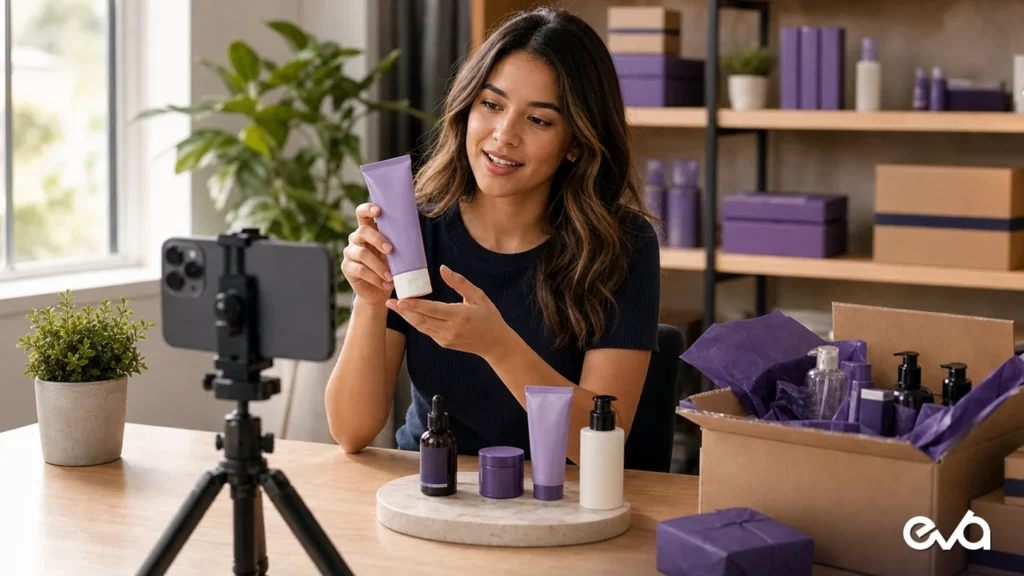
UGC for TikTok Shop is creator-style content that shows real product use, product proof, customer language, objections, demonstrations, reviews, routines, or before-and-after moments. It can come from customers, affiliates, creators, employees, or paid UGC creators. For TikTok Shop, strong UGC should connect to a product listing, product card, creator or affiliate strategy, ad testing, and inventory plan.
2026 operator note: UGC should become a testing system
User-generated content should help the brand learn which hooks, claims, use cases, objections, and demos move shoppers. The best UGC becomes a testing system for listings, creator briefs, Spark Ads, and shop conversion.
Related Eva resources: TikTok Shop Management, TikTok Shop video strategy, TikTok Shop Growth Playbook.
User-generated content is one of the strongest growth inputs for TikTok Shop, but only when it is managed like a commerce system. Random creator videos can create views. Structured UGC can create product understanding, search demand, product-card clicks, orders, reusable ad creative, and profitable learning.
The difference is operating discipline. The product has to be ready. The creator brief has to be clear. Claims have to be controlled. Usage rights have to be handled. Inventory has to support demand. Ads have to learn from the content. The listing has to convert.
Eva manages TikTok Shop as one coordinated TikTok Growth System. This guide explains how brands should use UGC in 2026 to turn creator-led proof into discoverable, scalable, and profitable TikTok Shop growth.
The goal is not to collect more videos. The goal is to create product clarity that can convert and scale.
Why UGC matters more on TikTok Shop
TikTok Shop compresses the distance between discovery and checkout. A shopper can see a creator demonstrate a product, tap a product card, inspect the listing, and buy without leaving the experience. That makes trust and clarity extremely important.
UGC helps because it can show the product in context. It can answer the buyer’s first questions: What is it? Who is it for? How does it work? What problem does it solve? Is it worth the price? Can I trust this product?
But UGC also creates risk when it is unmanaged. Bad claims, poor demonstrations, unclear product language, mismatched creators, stockouts, and weak listings can turn attention into customer confusion. TikTok Shop UGC needs one operating owner.
UGC, creator content, and affiliate content are not the same thing
| Content type | Main purpose | What brands need to manage |
|---|---|---|
| UGC | Create product proof and realistic demonstrations | Brief, claims, rights, product clarity, reuse plan. |
| Creator content | Reach an audience through a creator’s trust and style | Creator fit, audience, product category, content quality. |
| Affiliate content | Drive commission-based sales through creator promotion | Commission, samples, product selection, attribution, inventory. |
| Ad creative | Scale proven hooks and products with paid media | Authorization, creative testing, offer, margin, landing experience. |
The best TikTok Shop brands connect all four. UGC creates product proof. Creators create trust. Affiliate turns content into sales activity. Ads help scale what works.
The TikTok Shop UGC operating model
Use this model before sending products to creators or buying more content.
- Choose the right SKU: prioritize products with strong margin, clear use cases, enough inventory, and low return risk.
- Define the buyer problem: the content should answer a real shopper question, not only show packaging.
- Write the creator brief: include product use case, proof points, claims guardrails, objections, and what not to say.
- Control rights: clarify whether the brand can reuse the content in Shop Ads, Video Shopping Ads, Spark-style amplification, email, landing pages, or PDPs.
- Connect the listing: make sure title, images, description, reviews, price, shipping, and product card match the content language.
- Measure the right metrics: track product-card clicks, conversion, CPA, contribution margin, refund reasons, and inventory impact.
Step 1: choose products that deserve UGC
Not every product deserves creator budget. TikTok Shop UGC works best when a product is easy to demonstrate, easy to explain, margin-positive, stocked, compliant, and ready to ship.
Products with unclear benefits, weak margin, limited inventory, high return risk, or heavy compliance requirements need work before creator outreach. A viral video can make a weak operation more expensive.
For product selection, read Eva’s TikTok Shop product categories guide. Category readiness should come before UGC volume.
Step 2: brief creators around buyer questions
A strong UGC brief should not turn creators into robots. It should give them enough product truth to create useful, trustworthy content. The brief should explain who the product is for, when to use it, what problem it solves, what proof matters, what claims are allowed, and what questions shoppers usually ask.
Use customer reviews, comments, support tickets, search queries, competitor videos, and listing questions to build the brief. If shoppers keep asking the same question, that question should become content.
Step 3: connect UGC to TikTok Shop SEO
UGC should use the same language as the product listing. If creators call the product one thing and the listing calls it another, shoppers receive mixed signals. The title, category, attributes, description, captions, product cards, and creator vocabulary should reinforce the same product story.
For the search side, read Eva’s TikTok Shop SEO guide. UGC can support search discovery when it uses clear product language, buyer problems, and category terms.
Step 4: turn winning UGC into ad learning
UGC should not stop at organic posting. Strong content can become a paid-media learning input when rights and authorization are handled properly. TikTok Shop Ads, Video Shopping Ads, and GMV Max can help brands learn which hooks, products, audiences, and offers convert.
The key is to amplify what is already showing commercial promise. If a video gets attention but the product does not convert, audit the listing, offer, price, reviews, shipping, and inventory before scaling spend.
For the paid-media model, read Eva’s TikTok Shop Ads and GMV Max guide.
Brands should clarify usage rights before content is created. Can the brand use the video in TikTok Shop Ads? Can it be used on the product page, Amazon, Shopify, email, landing pages, or paid social? Can the creator’s handle be used? How long can the brand use the content?
This is not legal busywork. If a piece of UGC works and the brand does not have the right to reuse it, the learning becomes harder to scale.
Step 6: protect inventory and fulfillment
UGC can create demand faster than a forecast expects. Before sending samples or increasing affiliate outreach, confirm available units, replenishment timing, fulfillment method, shipping promise, and return risk. If inventory is weak, content can create a stockout instead of a growth loop.
For the operating side, read Eva’s TikTok Shop fulfillment guide.
UGC metrics that actually matter
Views are useful, but they are not enough. TikTok Shop brands need to measure content through a commerce lens.
- Product-card click rate
- Product-page conversion rate
- Orders by creator, product, and content angle
- Contribution margin after commission, samples, discounts, shipping, returns, and ads
- Refund reasons and customer questions
- Inventory impact after content spikes
- Creative reuse rate in ads and listings
- Creator repeatability by category and SKU
UGC mistakes to avoid
- Buying generic videos before selecting the right products.
- Letting creators make unsupported claims.
- Sending samples without inventory reserves.
- Ignoring usage rights until after a video performs.
- Measuring views instead of product-level profit.
- Scaling ads against videos that create clicks but weak orders.
- Using creator language that does not match the listing or product card.
A 30/60/90 plan for TikTok Shop UGC
Days 1 to 30: build the UGC foundation
- Choose the first SKU set by margin, inventory, category fit, and demo value.
- Audit listings for title, category, images, price, shipping, variations, and reviews.
- Build creator briefs from buyer questions and product proof.
- Define usage rights, claims guardrails, and sample rules before outreach.
Days 31 to 60: test creators and hooks
- Test multiple creators against different product use cases.
- Compare hooks by product-card clicks, conversion, and customer questions.
- Use early paid tests only for content with clear commercial signals.
- Move winning language back into listings and creator briefs.
Days 61 to 90: scale what is profitable
- Expand creator outreach for products with stable inventory and margin.
- Reuse winning UGC in Shop Ads, landing pages, email, and PDPs where rights allow.
- Increase ad spend only where product-level economics are healthy.
- Review profit after samples, commission, shipping, returns, discounts, and ads.
How Eva manages UGC for TikTok Shop
Eva does not treat UGC as a one-off creative task. Eva connects UGC to product selection, creator and affiliate strategy, TikTok Shop SEO, paid media, inventory, fulfillment, and profitability.
That matters because the content that wins on TikTok Shop is not only entertaining. It is clear, credible, useful, linked to the right product, supported by enough inventory, and measured through profit. Eva helps brands build that system with one accountable team.
For the broader creator-commerce system, read TikTok Shop Affiliate Program, TikTok Shop Algorithm, and the Social to Search Demand Capture Playbook.
Related Eva guide: Choose where creator content should lead with the TikTok Shop vs Instagram Shopping guide for brands.
Related Eva guide: Customer content can become a repeatable community input rather than a one-time asset. Eva's TikTok Shop community-building guide shows how to build the feedback loop.
Related Eva guide: Customer and creator content can introduce claim, rights, and product-accuracy risk. Use Eva's TikTok Shop account health guide for prevention and corrective action.
FAQ
Is UGC the same as influencer marketing?
No. Influencer marketing usually depends on audience reach. UGC is more focused on product proof, demonstrations, buyer questions, and reusable creative. Some creators can do both, but the goals are different.
Can UGC be used in TikTok Shop Ads?
Yes, when the brand has the right usage permissions and follows TikTok’s ad and authorization requirements. Rights should be clarified before content is created.
How many UGC videos should a brand test?
Start with enough variation to test different hooks, use cases, objections, and creators. The exact number depends on product economics, sample budget, creator availability, and inventory readiness.
What makes UGC work for TikTok Shop?
Strong UGC is clear, believable, product-specific, easy to understand, connected to the listing, compliant, and backed by a product that can be fulfilled profitably.
What should brands measure first?
Measure product-card clicks, conversion, orders, contribution margin, refund reasons, and inventory impact. Views alone do not show whether UGC is creating profitable growth.