Table of Contents
- Introduction
- How to choose Target Roundel ad placements in 2026
- 1. Start with item and business readiness
- 2. Match placement to shopping intent
- 3. Coordinate audience, creative, and frequency
- 4. Measure sales, incrementality, and profit
- What Are Target Ad Placements?
- The Science Behind Effective Ad Placement Strategies
- Analyzing Your Audience: The Foundation of Target Ad Placement
- Top-Performing Ad Placements Across Platforms
- Mobile vs. Desktop: Adapting for Devices
- The Power of Native Advertising
- Retargeting: Leveraging Past Behaviors
- How Eva Can Help?
- A/B Testing: Continuous Optimization
- Emerging Trends in Ad Placement Technology
- Measuring Success: Key Metrics
- Conclusion
- Frequently Asked Questions
Introduction
In today’s hyper-competitive digital landscape, understanding and mastering target ad placements is essential for businesses aiming to maximize ROI and drive conversions.
How to choose Target Roundel ad placements in 2026
Quick answer: Choose Roundel placements according to the customer decision: Target Product Ads and search for high-intent discovery, onsite display for consideration near retail activity, Order Ready and app moments for relevant post-purchase communication, and Bullseye Marketplace or programmatic for offsite reach. Connect every placement with product readiness, inventory, creative, audience, and incremental sales or profit.
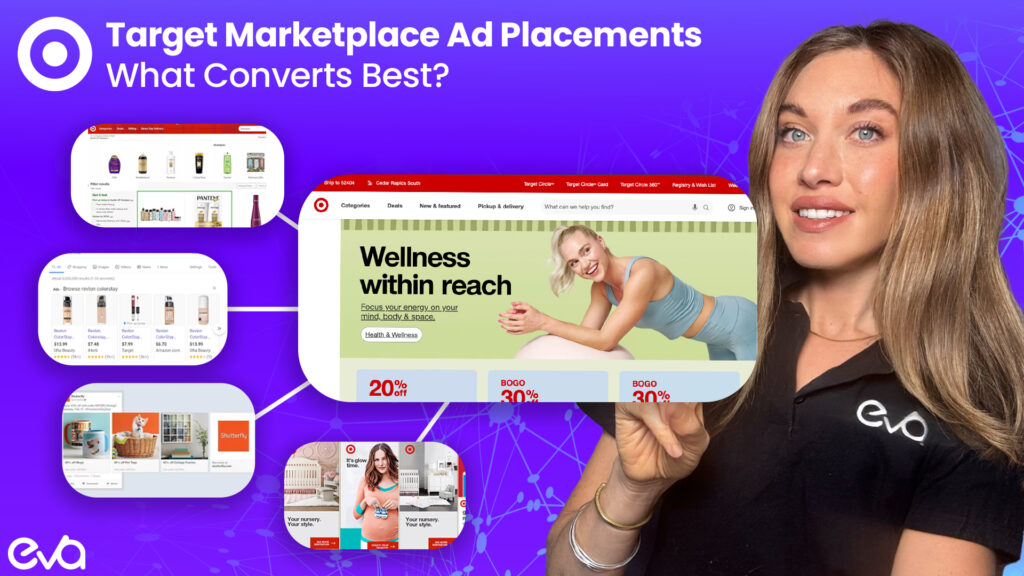
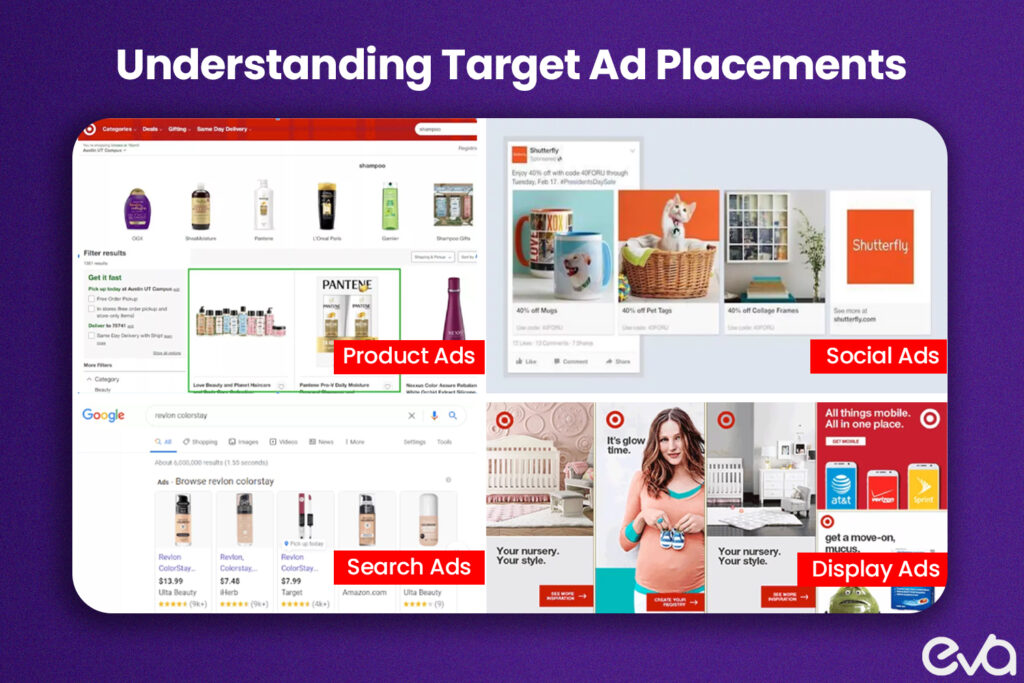
Roundel offers media on Target.com, the Target app, social, streaming, programmatic, and premium publisher supply. The strongest plan does not buy every available placement. It assigns each format a job, protects frequency and customer relevance, and uses Target first-party signals and closed-loop measurement without confusing attributed sales with incremental value.
| Placement family | Best role | Primary control |
|---|---|---|
| Product and search ads | Capture active product intent | Item readiness, bid, query, price, and stock |
| Onsite and app display | Create consideration near retail behavior | Audience, creative, placement, and frequency |
| Offsite and programmatic | Extend Target audiences across premium supply | Supply, reach, frequency, and brand safety |
| Social, video, and streaming | Build product and brand demand | Creative quality and incremental outcome |
1. Start with item and business readiness
Confirm assortment, item setup, product page, price, reviews, availability, fulfillment, contribution, and replenishment. Advertising cannot compensate for an unavailable or weak retail offer. Define the business objective and product group before choosing placement. Protect inventory and make sure the customer can complete the promised purchase.
2. Match placement to shopping intent
Use product and search formats where shoppers are actively discovering items. Use onsite or app display where the brand can add relevant consideration. Explore Order Ready and other app moments only when the message is useful in that customer context. Use offsite supply to reach Target audiences beyond the retailer while keeping the creative appropriate to the environment.
3. Coordinate audience, creative, and frequency
Define customer, category, purchase, lapsed, prospecting, or other allowed audience roles. Adapt creative to placement, device, and stage. Maintain product truth and readable offers. Control repeated exposure across onsite and offsite plans where possible. A high-value Target audience can still receive a weak or excessive message.
4. Measure sales, incrementality, and profit
Use Roundel reporting to understand media and retail outcomes, then add a credible counterfactual where the decision requires incrementality. Connect spend with item sales, new customers where available, returns, inventory, and contribution. Compare placements by the business role they were assigned rather than forcing awareness and search formats into one last-touch return target.
Primary sources: Roundel currently describes placements across Target.com, the Target app, onsite display, product and search ads, Order Ready Ads, Bullseye Marketplace, social, video, and programmatic supply. Review Roundel Display, the display placement guide, and Programmatic by Roundel.
Related Eva resources: Target Advertising, Full-Funnel Commerce Playbook, Target Roundel Advertising Strategy.
Strategically positioning advertisements where they resonate most with your audience can transform a campaign from average to exceptional.
However, achieving this requires a sophisticated approach, combining data-driven insights with a deep understanding of consumer behavior and platform-specific dynamics.
This comprehensive guide will explore the art and science of target ad placements, providing actionable insights to elevate your advertising strategy.
By the end, you’ll have a roadmap to position your ads effectively and dominate your marketplace, especially on platforms like Amazon, where precision is critical.
What Are Target Ad Placements?
Quick answer: Definition : Target ad placements refer to the deliberate positioning of advertisements on platforms and specific sections of those platforms to engage a desired audience effectively. Unlike generalized ad deployment, this approach ensures ads are placed where they are most likely to convert.
Definition: Target ad placements refer to the deliberate positioning of advertisements on platforms and specific sections of those platforms to engage a desired audience effectively.
Unlike generalized ad deployment, this approach ensures ads are placed where they are most likely to convert.
Why Do They Matter? Ad placements significantly influence visibility, engagement, and conversions.
Proper placement ensures your ad aligns seamlessly with user behavior, reducing intrusiveness and boosting interaction rates.
For instance, an ad for fitness gear is more effective on workout apps or health blogs than on generic platforms.
Key Considerations:
- User Intent: Ads aligned with users’ active searches yield higher engagement.
- Device Preferences: Desktop and mobile users engage differently, necessitating tailored placements.
- Contextual Relevance: Ads matching the surrounding content feel natural and engaging.
Example: A luxury travel agency placing ads on travel-focused YouTube channels or blogs achieves better results than generic news websites. This strategic placement ensures the audience is already in a travel-related mindset.
The Science Behind Effective Ad Placement Strategies
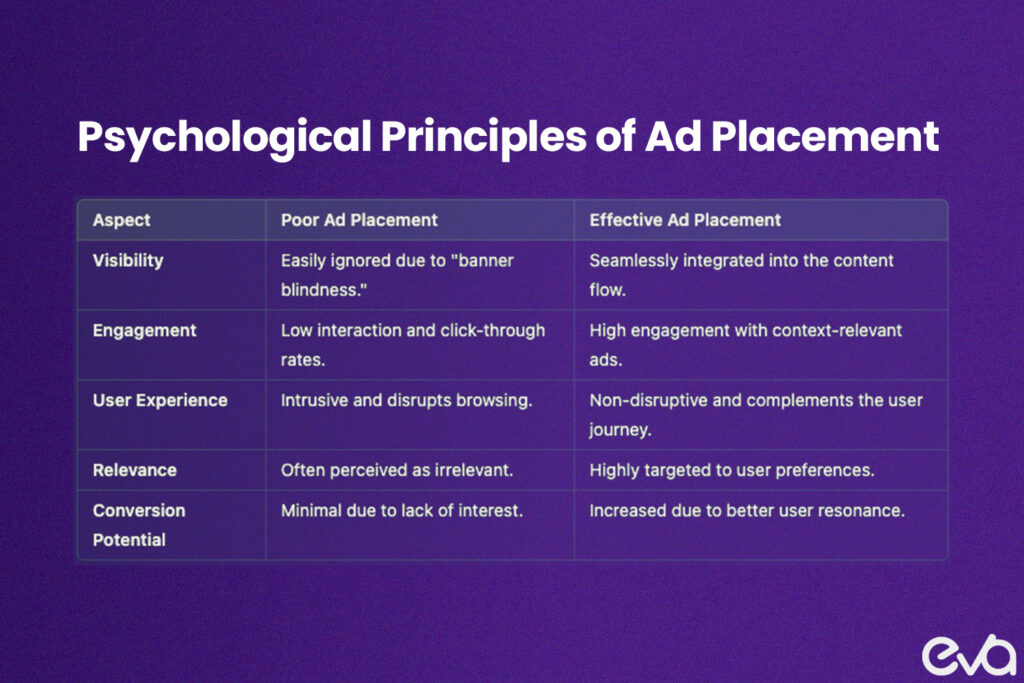
Leveraging Consumer Psychology
Quick answer: Leveraging Consumer Psychology is important for Target Ad Placements: The Key to Conversion Success because it shapes how Amazon teams make decisions, prioritize work, and measure whether marketplace activity is producing profitable growth. Effective ad placements tap into behavioral and psychological principles to maximize impact:
Effective ad placements tap into behavioral and psychological principles to maximize impact:
- Banner Blindness: Users often ignore banner-like ads. The solution lies in designing ads that integrate naturally with the platform’s content. For example, Instagram’s in-feed ads outperform banners as they mimic organic posts.
- Cognitive Load: Simplify decision-making by placing ads where users are already focused, such as in-article placements.
- Primacy and Recency Effect: Ads placed at the beginning or end of content (e.g., YouTube pre-roll ads) are more memorable than those in the middle.
Effective Ad Formats
- Above-the-Fold Placements: Maximize visibility by positioning ads in the immediate viewing area.
- In-Feed Ads: Offer a seamless, native feel on platforms like Facebook and Instagram.
- Interstitial Ads: Capture attention during transitions, such as between app screens.
Analyzing Your Audience: The Foundation of Target Ad Placement
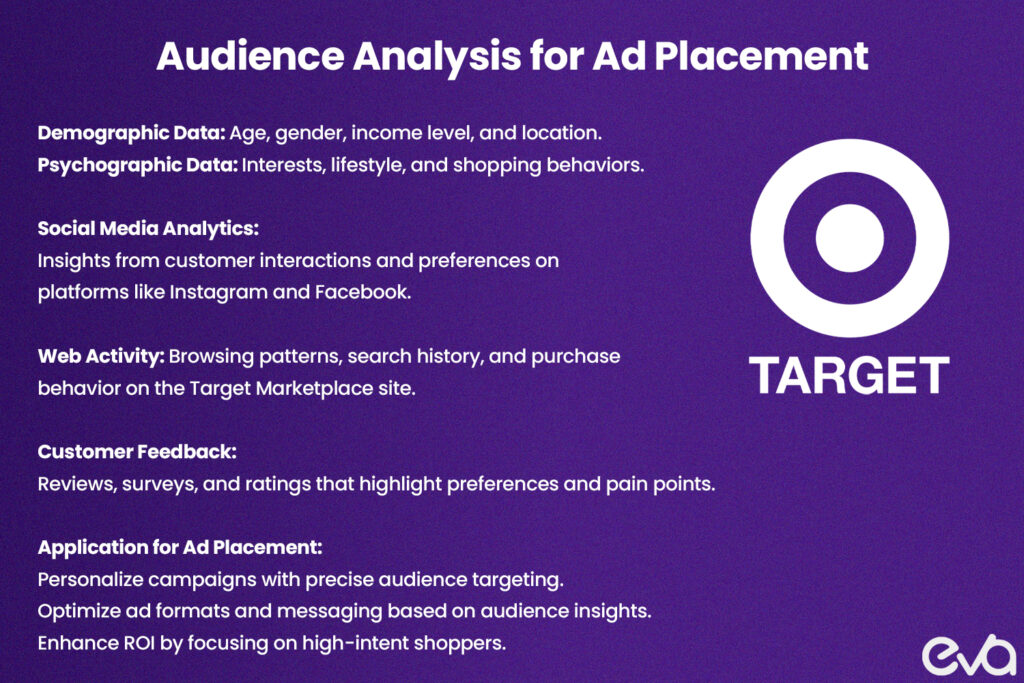
Quick answer: Analyzing Your Audience: The Foundation of Target Ad Placement is important for Target Ad Placements: The Key to Conversion Success because it shapes how Amazon teams make decisions, prioritize work, and measure whether marketplace activity is producing profitable growth. Before placing ads, understanding your audience is critical. This requires going beyond basic demographics to explore online behaviors, preferences, and challenges.
Before placing ads, understanding your audience is critical. This requires going beyond basic demographics to explore online behaviors, preferences, and challenges.
Building Buyer Personas
- Demographics: Age, gender, and location.
- Psychographics: Interests, values, and pain points.
- Behavioral Insights: Purchasing habits and preferred platforms.
Tools for Audience Insights
- Data Analytics Platforms: Google Analytics and Facebook Insights provide invaluable data.
- Social Listening Tools: Monitor trends and sentiments.
- Surveys and Polls: Collect direct feedback from your audience.
Top-Performing Ad Placements Across Platforms
Social Media
- In-Feed Ads: Blend seamlessly into Facebook and Instagram feeds.
- Story Ads: High-visibility, short-duration content on Instagram and Snapchat.
- Sponsored InMail: Directly reach professionals on LinkedIn.
Search Engines
- Top-of-Page Ads: Maximize visibility on Google and Bing.
- Shopping Ads: Showcase products with images and prices for e-commerce businesses.
E-Commerce Platforms
- Sponsored Product Listings: Highlight specific products on Amazon.
- Banner Ads: Target category pages or cart reminders.
Mobile Apps
- Rewarded Video Ads: Engage users by offering incentives.
- Interstitial Ads: Gain attention during transitions.
Mobile vs. Desktop: Adapting for Devices
Mobile Placements
- Vertical Formats: Optimize for smartphone screens.
- Location-Based Ads: Leverage GPS targeting.
- Lightweight Content: Ensure fast loading speeds.
Desktop Placements
- Interactive Ads: Engage users with detailed formats.
- Sidebar Ads: Utilize larger screen space.
- Rich Media: Offer immersive experiences.
The Power of Native Advertising
Quick answer: The Power of Native Advertising is important for Target Ad Placements: The Key to Conversion Success because it shapes how Amazon teams make decisions, prioritize work, and measure whether marketplace activity is producing profitable growth. Native ads blend seamlessly with content, making them highly effective for building trust and engagement. Best Practices:
Native ads blend seamlessly with content, making them highly effective for building trust and engagement.
Types of Native Ads
- Sponsored Articles: Align with the platform’s tone.
- In-Feed Social Media Ads: Mimic organic posts.
- Recommended Content Widgets: Use platforms like Outbrain or Taboola.
Best Practices:
- Provide value rather than overtly promoting.
- Match the platform’s aesthetics and tone.
Retargeting: Leveraging Past Behaviors
Quick answer: Retargeting: Leveraging Past Behaviors is important for Target Ad Placements: The Key to Conversion Success because it shapes how Amazon teams make decisions, prioritize work, and measure whether marketplace activity is producing profitable growth. Retargeting shows ads to users who’ve interacted with your brand before, ensuring higher conversion potential.
Retargeting shows ads to users who’ve interacted with your brand before, ensuring higher conversion potential.
Techniques
- Dynamic Retargeting: Showcase products users viewed.
- Cross-Device Retargeting: Engage users across devices.
- Frequency Caps: Avoid overwhelming users.
How Eva Can Help?
Quick answer: Eva is a leading eCommerce technology company dedicated to helping brands achieve profitable growth on Amazon, Walmart, and other marketplaces. With a unique AI-powered platform and a team of experts, Eva enables brands to optimize their advertising strategies and make data-driven decisions.
Eva is a leading eCommerce technology company dedicated to helping brands achieve profitable growth on Amazon, Walmart, and other marketplaces. With a unique AI-powered platform and a team of experts, Eva enables brands to optimize their advertising strategies and make data-driven decisions.
- Context-Aware Advertising: Eva’s AI platform is the only solution that integrates inventory levels, conversion rates, and profitability metrics across multiple marketplaces-not just Amazon. This ensures your ad placements align with real-time business needs and market conditions.
- Data-Driven Insights: Our experts analyze data to determine the best actions for your advertising campaigns, ensuring maximum efficiency and ROI.
- Strategic Partnerships: As an Amazon Advanced Partner and Walmart Strategic Solution Partner, Eva collaborates with industry giants like TikTok, eBay, Shopify, Google, Meta, Wayfair, Faire, and more to provide holistic solutions.
- Sustainable Growth: Eva focuses on profitability, helping brands invest in the most effective multimedia mix for marketing efforts. This includes optimizing ad placements to drive conversions.
Ready to master your ad placements and boost conversions? Partner with Eva to unlock the full potential of your advertising campaigns.
Let our AI-driven insights and expert support guide you to sustainable growth in today’s competitive eCommerce landscape. Contact us today to get started!
A/B Testing: Continuous Optimization
Quick answer: A/B Testing: Continuous Optimization is important for Target Ad Placements: The Key to Conversion Success because it shapes how Amazon teams make decisions, prioritize work, and measure whether marketplace activity is producing profitable growth. Regular testing refines your strategies:
Regular testing refines your strategies:
- Ad Positions: Compare placement effectiveness.
- Creative Elements: Test headlines, CTAs, and visuals.
- Targeting Criteria: Experiment with audience segments.
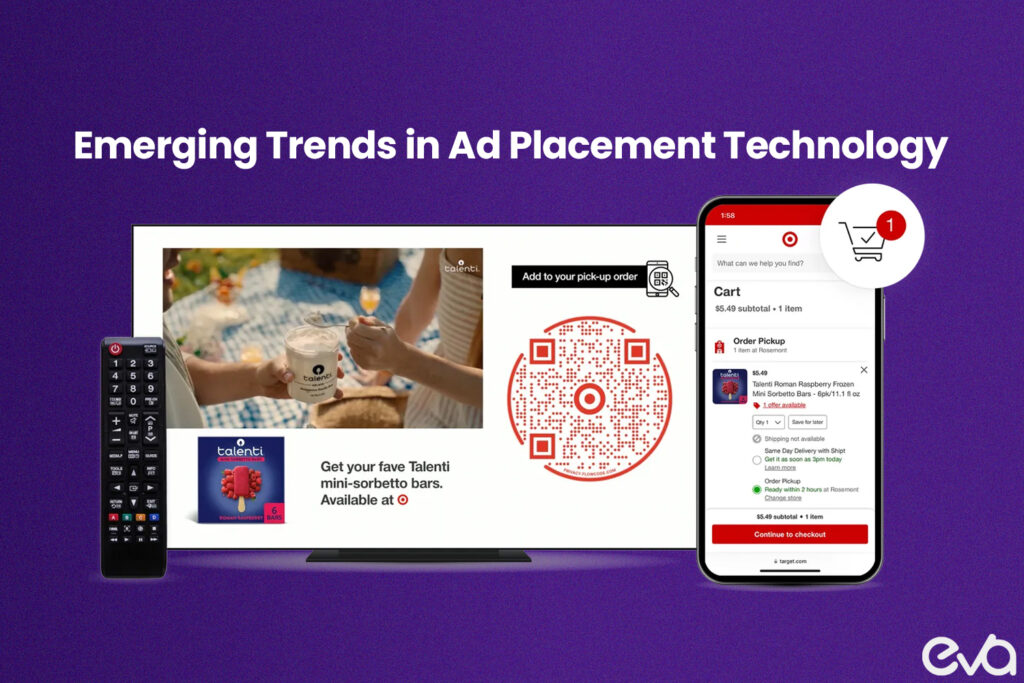
Emerging Trends in Ad Placement Technology
- AI-Driven Optimization: Automate adjustments for better performance.
- AR/VR Advertising: Create immersive ad experiences.
- Voice-Activated Ads: Leverage smart devices for engagement.
- Programmatic DOOH Ads: Real-time bidding for digital billboards.
Measuring Success: Key Metrics
Quick answer: Measuring Success: Key Metrics is important for Target Ad Placements: The Key to Conversion Success because it shapes how Amazon teams make decisions, prioritize work, and measure whether marketplace activity is producing profitable growth. Track these KPIs to evaluate performance:
Track these KPIs to evaluate performance:
- Click-Through Rate (CTR): Measures engagement.
- Conversion Rate: Indicates campaign effectiveness.
- ROAS: Assesses profitability.
- Bounce Rate: Highlights landing page alignment.
Conclusion
Mastering target ad placements requires strategic planning, audience understanding, and ongoing optimization.
By leveraging these insights and staying ahead of technological trends, businesses can achieve unparalleled success in their advertising efforts.
Start refining your strategy today to unlock the full potential of your ad campaigns.
Frequently Asked Questions
Quick answer: Target ad placements refer to the strategic positioning of advertisements on specific sections of platforms to reach and engage a desired audience effectively. It ensures higher visibility and conversion potential. Proper ad placements maximize ROI by ensuring ads are shown in relevant spaces where they resonate with user intent, leading to better engagement and conversions.
Target ad placements refer to the strategic positioning of advertisements on specific sections of platforms to reach and engage a desired audience effectively. It ensures higher visibility and conversion potential.
Proper ad placements maximize ROI by ensuring ads are shown in relevant spaces where they resonate with user intent, leading to better engagement and conversions.
Analyze your audience using tools like Eva’s AI platform, which integrates inventory levels, conversion rates, and profitability metrics to guide data-driven decisions for ad placements.
Social media, search engines, and e-commerce platforms like Amazon are highly effective. Using Eva’s AI-driven insights can help determine the ideal platform for your brand.
Eva’s unique AI platform provides context-aware advertising by integrating critical business metrics, ensuring your ads reach the right audience at the right time.
Retargeting re-engages users who’ve interacted with your brand before, using techniques like dynamic product ads and cross-device targeting to boost conversions.
Yes, and Eva’s AI platform ensures optimization for both mobile and desktop users, considering factors like screen size, user behavior, and platform usage.
Track key metrics such as CTR, conversion rate, ROAS, and bounce rate. Eva’s platform provides detailed analytics to evaluate and refine your campaigns.
What emerging technologies are influencing ad placements?
AI-driven optimization, AR/VR advertising, and voice-activated ads are shaping the future of ad placements. Eva integrates these advancements into its services.
Partner with Eva to leverage advanced AI-driven tools and expert guidance, ensuring your ad placements are optimized for maximum impact and profitability.