TIKTOK SHOP SALES STRATEGY
Table of Contents
- 2026 Operator Note: TikTok Sales Strategy Starts with Product-Market Fit
- Quick Answer: What Drives TikTok Shop Sales?
- The 2026 TikTok Shop Sales Model
- Strategy 1: Choose Products That Can Sell Visually
- Strategy 2: Make the Product Card and Listing Conversion-Ready
- Strategy 3: Use Creators to Create Product Proof
- Strategy 4: Build an Affiliate Program Around Your Best SKUs
- Strategy 5: Use Live Selling When the Product Needs Explanation
- Strategy 6: Scale Winners with Shop Ads and GMV Max
- Strategy 7: Use TikTok Demand to Support Amazon and Shopify
- Strategy 8: Protect Inventory Before Creator Demand Spikes
- Strategy 9: Measure Profit, Not Only GMV
- Strategy 10: Run a Weekly TikTok Shop Sales Review
- A 30/60/90 Sales Plan for TikTok Shop
- How Eva Manages TikTok Shop Sales
- FAQ
- Sources and Further Reading
2026 Operator Note: TikTok Sales Strategy Starts with Product-Market Fit
The best TikTok Shop sales strategies prioritize products that can be demonstrated quickly, fulfilled reliably, priced clearly, and amplified through creators and paid media without destroying margin.
Related Eva resources: TikTok Shop Management, TikTok Shop Growth Playbook, and TikTok Shop Ads Agency.
TikTok Shop can create sales quickly, but fast sales are not the same as profitable growth. The brands that win in 2026 will not rely on random viral moments. They will connect product selection, creator content, affiliate execution, listings, Shop Ads, inventory, fulfillment, and profit into one system.
This guide explains the TikTok Shop sales strategies that matter for brands that want repeatable growth, not one-off spikes. If you are still setting up the channel, start with Eva’s how to sell on TikTok Shop guide. If you are ready to scale with one accountable team, see TikTok Shop Management.
Quick Answer: What Drives TikTok Shop Sales?
Effective TikTok Shop sales strategies connect catalog readiness, creator content, paid media, offers, fulfillment, returns, and contribution-profit measurement. The right mix depends on product economics and operating capacity rather than a universal growth tactic. For managed execution, see Eva’s TikTok Shop management services.
The 2026 TikTok Shop Sales Model
TikTok Shop is a commerce engine, not only a social channel. A shopper can discover a product, watch a demonstration, tap the product card, review the listing, and buy in a short path. That makes the channel powerful, but it also exposes weak operations quickly.
Use this operating model before increasing creator outreach or ad spend:
- Product readiness: strong margin, clear use case, enough inventory, low return risk, and simple demonstration value.
- Content readiness: creators can explain the product in natural language, with controlled claims and useful proof.
- Listing readiness: product title, images, category, price, offer, reviews, shipping, and variations match the content promise.
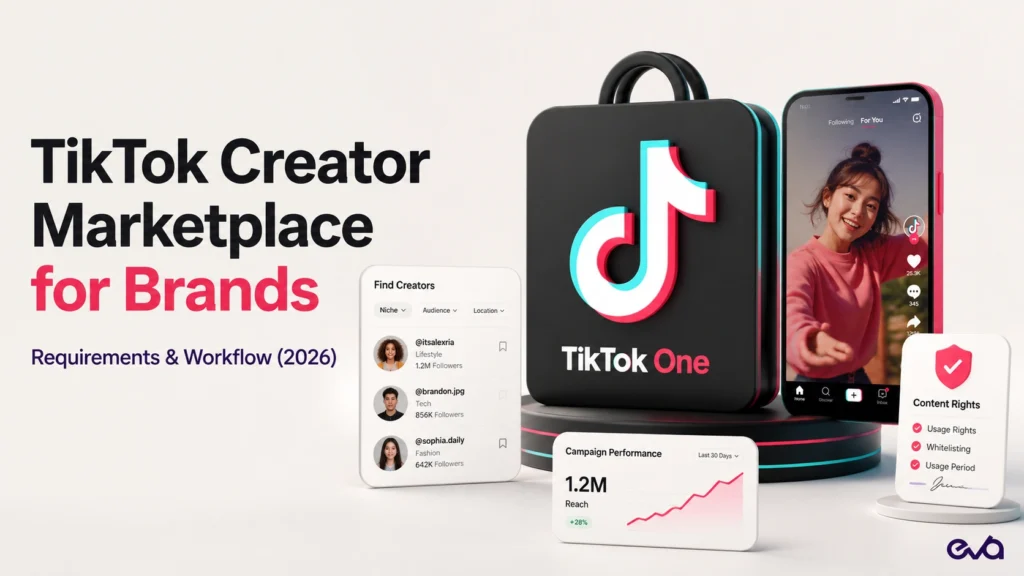
- Media readiness: Shop Ads, Video Shopping Ads, GMV Max, and live selling scale what is already showing commercial promise.
- Profit readiness: the brand measures contribution margin after samples, commissions, discounts, shipping, returns, and ads.
Strategy 1: Choose Products That Can Sell Visually
The best TikTok Shop products are easy to demonstrate, easy to understand, and easy to believe. A viewer should quickly see what the product is, who it is for, what problem it solves, and why it is worth buying now.
Before pushing a product, check margin, inventory, shipping promise, return risk, reviews, and creator fit. If the product requires a long explanation or has weak economics, creator traffic can make the problem bigger.
For category selection, read TikTok Shop Product Categories.
Strategy 2: Make the Product Card and Listing Conversion-Ready
Creators can create demand, but the listing has to close the sale. TikTok Shop sales often break when the video promise and the listing experience do not match. The title, category, product images, variations, price, delivery promise, reviews, and product description should reinforce the same buyer story.
Use the language buyers use in comments, creator briefs, search terms, reviews, and product questions. This also supports TikTok Shop SEO. For the listing and search side, read TikTok Shop SEO.
Strategy 3: Use Creators to Create Product Proof
TikTok Shop creators should do more than show a product. They should prove why it matters. Strong creator content answers buyer questions, demonstrates real use, handles objections, shows texture or scale, explains timing, and makes the product easier to trust.
Brief creators around buyer questions instead of giving them generic talking points. Include the use case, target buyer, allowed claims, what not to say, demonstration angles, product card instructions, and the main objection the content should address.
For a deeper creator-commerce model, read User-Generated Content for TikTok Shop.
Strategy 4: Build an Affiliate Program Around Your Best SKUs
Affiliate can create sales activity at scale, but only if the program is managed. Brands need the right SKU set, sample rules, commission logic, creator qualification, response time, inventory guardrails, and content feedback loop.
Do not open every SKU to every creator. Start with products that have margin, inventory, clear demonstration value, and enough product-market fit to make creators want to sell them. Then watch which creators create profitable orders, not only views.
For the affiliate operating system, read TikTok Shop Affiliate Program and the Creator Affiliate Program Operations Playbook.
Strategy 5: Use Live Selling When the Product Needs Explanation
Live selling can work when the product benefits from demonstration, comparison, questions, bundles, or urgency. It is especially useful when the shopper needs to see how the product works before buying.
The mistake is treating live as entertainment only. The better approach is to build a live run of show: what product opens the session, what proof points appear, what objections are answered, what offer is used, what inventory is available, and what content can be reused after the live ends.
For live execution and paid amplification, read TikTok Shop Live Ads.
Strategy 6: Scale Winners with Shop Ads and GMV Max
Paid media should scale learning, not hide weak product economics. Use ads to amplify products, creators, and hooks that already show commercial promise. If a video gets attention but the product does not convert, fix the listing, offer, reviews, price, shipping, or inventory before scaling spend.
GMV Max can help automate and expand sales activity, but the brand still needs the right product feed, creative inputs, margin guardrails, and measurement discipline. The system needs to know what profitable growth looks like.
For paid TikTok Shop growth, read TikTok Shop Ads and GMV Max.
Strategy 7: Use TikTok Demand to Support Amazon and Shopify
TikTok Shop sales are valuable, but TikTok demand can also lift branded search, Amazon discovery, Shopify conversion, email capture, and remarketing performance. The brand should not measure TikTok only inside TikTok.
A strong product video may lead some shoppers to buy on TikTok Shop, some to search on Amazon, and some to visit the brand’s Shopify store. Eva’s view is simple: manage the demand as one commerce system, not as disconnected channel reports.
For the cross-channel model, read the Social to Search Demand Capture Playbook.
Strategy 8: Protect Inventory Before Creator Demand Spikes
A creator win can expose weak inventory planning. If a product sells out, the brand loses the sales spike, frustrates creators, weakens customer experience, and may disrupt Amazon or Shopify availability. Inventory should be part of the content calendar.
Before a major affiliate push or live event, confirm available units, replenishment timing, fulfillment path, delivery promise, and return process. TikTok Shop sales strategies fail when operations cannot support demand.
For the operating layer, read TikTok Shop Fulfillment.
Strategy 9: Measure Profit, Not Only GMV
GMV can hide bad economics. A brand should measure contribution margin after creator commission, samples, discounts, free shipping, ad spend, returns, fulfillment costs, and support load. A sales strategy that grows unprofitable orders is not a strategy.
The most useful TikTok Shop operating view is product-level profitability. Which product sold? Which creator or content angle drove the order? What did it cost to create and amplify demand? What happened to returns, inventory, Amazon search, and Shopify traffic?
Strategy 10: Run a Weekly TikTok Shop Sales Review
TikTok Shop changes quickly. Brands need a weekly operating review that covers product sales, creator performance, affiliate outreach, content learnings, ad spend, fulfillment issues, stockouts, refunds, reviews, and next week’s SKU priorities.
The goal is not to react to every video. The goal is to keep improving the system: better products, better creator briefs, better listing clarity, better ad learning, better inventory planning, and better profit.
A 30/60/90 Sales Plan for TikTok Shop
Days 1 to 30: Fix the Foundation
- Choose 3 to 10 products by margin, demonstration value, inventory, and return risk.
- Clean listings, product cards, categories, images, descriptions, shipping, and offer structure.
- Build creator briefs from buyer questions and product proof.
- Set affiliate commission rules, sample rules, and content claims guardrails.
Days 31 to 60: Test Creators, Hooks, and Offers
- Recruit creators for the priority SKUs.
- Test different demonstration angles, product questions, and buyer objections.
- Use early ad tests only on content with product-card clicks and conversion signals.
- Move winning language into listings, briefs, and live scripts.
Days 61 to 90: Scale the Profitable Loops
- Increase creator outreach for products with strong conversion and stable inventory.
- Scale winning content with Shop Ads, Video Shopping Ads, or GMV Max where margin supports it.
- Protect replenishment, fulfillment, and customer support before larger pushes.
- Measure TikTok demand impact across Amazon, Shopify, and customer lifetime value.
How Eva Manages TikTok Shop Sales
Eva manages TikTok Shop as part of a broader commerce system. The work includes product selection, creator and affiliate operations, listing clarity, Shop Ads, inventory planning, fulfillment readiness, Shopify and Amazon demand capture, and profit measurement.
That matters because TikTok Shop is not only about getting more views. The real work is turning creator-led demand into profitable orders and then using that demand to strengthen the whole brand. Eva gives brands one team accountable for the system.
Start with TikTok Shop Management, then connect the channel with Amazon Management and Shopify Management.
Related Eva guide: Protect margin before launching an offer with the TikTok Shop discounts and coupons guide and its promotion controls.
Related Eva guide: Urgency can support a sales strategy when the economics and operations are controlled. Continue with Eva's profit-safe TikTok Shop flash sale framework for the checklist.
FAQ
What Is the Fastest Way to Increase TikTok Shop Sales?
The fastest practical path is to choose products that are already ready to sell, improve the listing, recruit relevant creators, use clear product proof, and amplify early winners with paid media only when conversion and margin support it.
Do TikTok Shop Sales Strategies Work for Every Category?
No. The best categories usually have visual demonstration value, clear buyer problems, simple fulfillment, healthy margin, and low return risk. High-consideration or hard-to-explain products need a more careful content and education strategy.
Should Brands Focus on Affiliates or Ads First?
Most brands should start by proving product and creator fit before scaling ads. Ads work better when the brand already knows which product, hook, offer, and creator style converts.
How Should Brands Measure TikTok Shop Sales?
Measure orders, product-card clicks, conversion rate, creator performance, ad spend, commission, sample cost, discounts, shipping, returns, inventory impact, and contribution margin. GMV alone is not enough.
Can TikTok Shop Help Amazon and Shopify Sales?
Yes. TikTok can create product discovery that later appears as Amazon branded search, Amazon purchases, Shopify visits, email signups, and retargeting audiences. Brands should measure the total demand effect, not only TikTok-native sales.